Nerovia Health:-AI-Based Disease Prediction System

Nerovia Health is an AI-powered neurological disease prediction platform that enables early detection of brain disorders through advanced medical data analysis. Using deep learning, neuroimaging, and wearable health data, it delivers predictive insights and clinical decision support for improved patient care.

Nerovia Health banner
Nerovia Health AI-Based Neurological Disease Prediction System
Industry
Healthcare / Neurology / HealthTech
Solution
AI-powered neurological disease prediction and brain health monitoring system
Service
Neurological Risk Analysis Brain Disorder Prediction Clinical Decision Support for Neurologists Remote Brain Health Monitoring
Technologies
Artificial Intelligence (AI) Deep Learning Neuroimaging Analysis (MRI/CT Scan) Big Data Analytics IoT (Wearable Devices)
Project overview:

Nerovia Health’s Neurological Disease Prediction System is a kind of AI that will help neurologists to first recognize, and secondly diagnose all sorts of potential neurological issues before they become severe. Neurological diseases, including but not limited to, Alzheimer’s Disease, Parkinson’s Disease, Epilepsy, and Brain Tumors can be very difficult to identify during the early stages of development because they frequently develop over several years.

The system developed by Nerovia Health captures and analyzes multiple sources of Neurological Data including but not limited to, Brain Imagery (MRIs and CTs), Patient Medical History, Comprehensive Cognitive Assessments, and Data from Wearable Devices to identify patterns and anomalies / deviations from normal in order to identify early indicators of the potential onset of a Neurological Disease using sophisticated Machine Learning and Advanced Deep Learning Algorithms.

The primary purpose of this system is to use artificial intelligence to scan the brain’s image to identify any alterations made in its structure and function using neuroimaging.

A centralized dashboard enables neurologists to receive risk scores, and predictive insights, and view the results of their analysis of the brain scan images. This functionality allows providers to expedite their decision-making and deliver patient’s more accurate and personalized treatment plans.
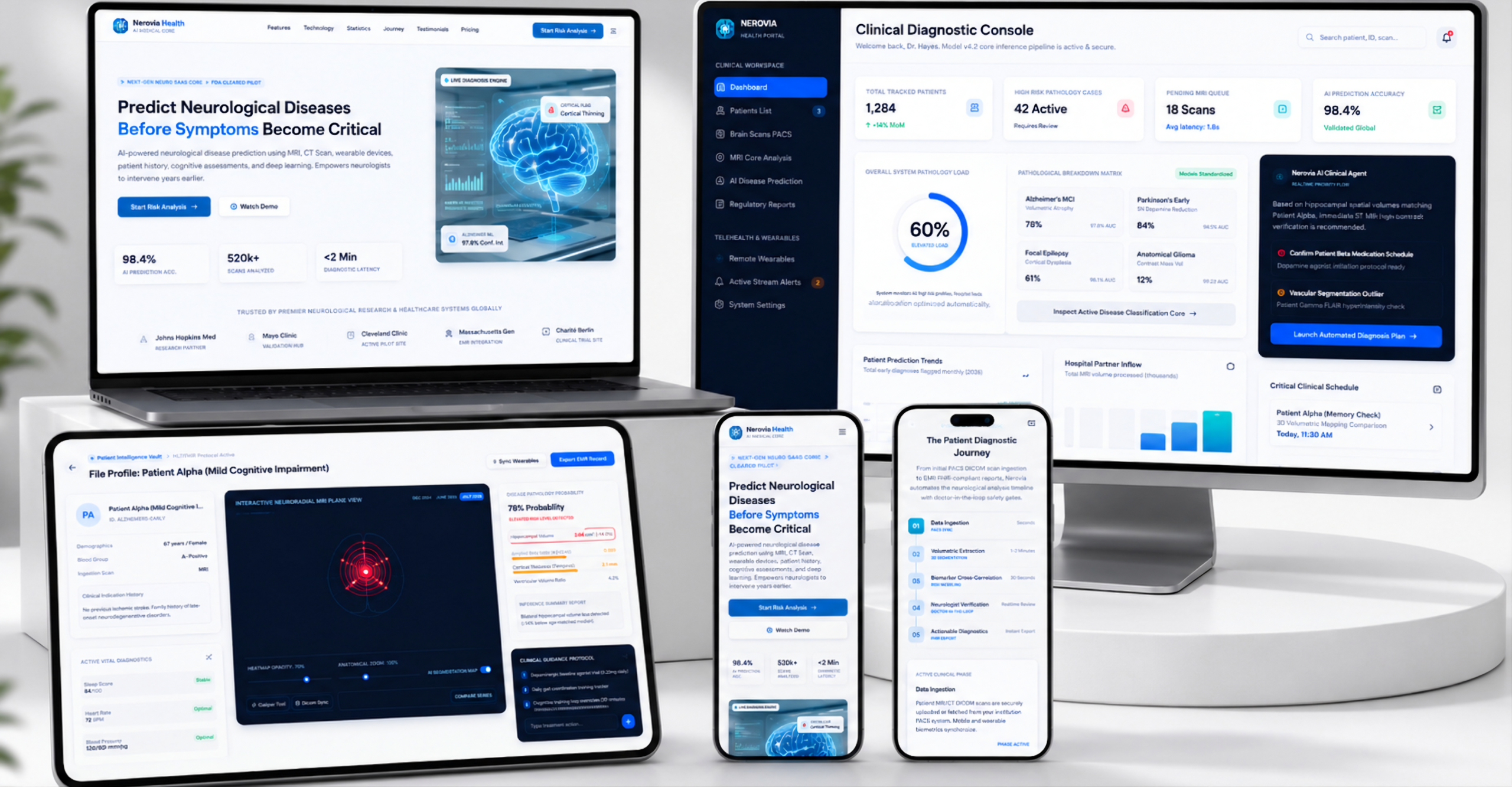
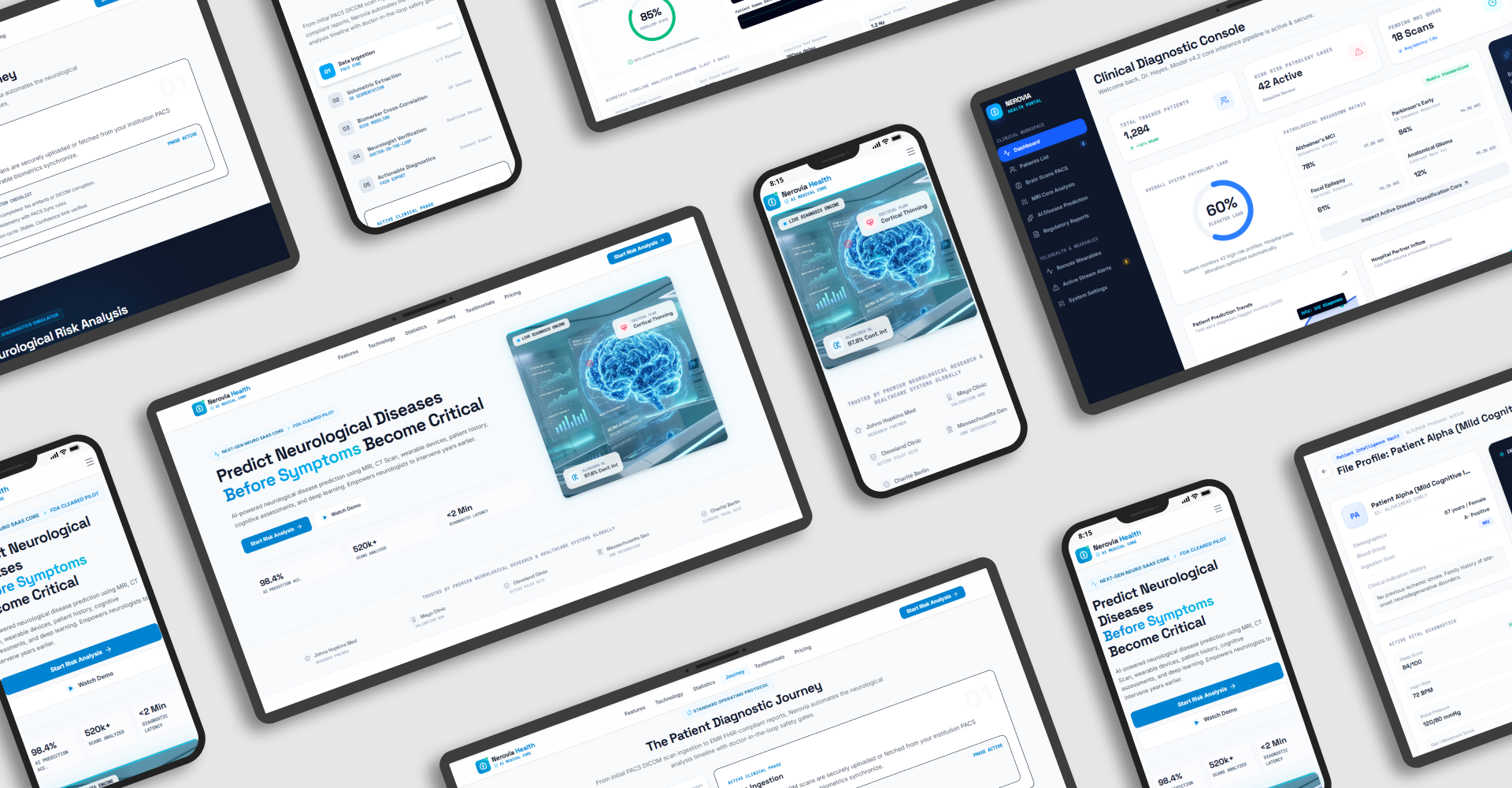
Nerovia Health
The Problems

In the healthcare sector, early detection, accurate diagnosis, and continuous monitoring are essential for effective treatment of neurological disorders. However, traditional neurological diagnosis methods often face limitations due to complex medical data, manual analysis, and lack of predictive capabilities

The project kick-off identified the following challenges:

  • Late Diagnosis of Neurological Disorders Prior to the initiation of the Nerovia Health System, late diagnoses of brain disorders was amongst the major ongoing issues Neuro Workers faced. Many brain disorders did not produce overt signs until late in their progression, so using standard diagnostic assessments would often lead to their identification only after the given level of damage had occurred and the subsequent effectiveness of the resulting treatment would be less than optimal as a result.
  • Complexity in Analyzing Brain DataIn addition, another significant challenge was the enormous volume and complexity of the neurological data that needed to be interpreted. The complexity of the given examination of neurological data, especially the detailed information provided from imaging technologies (both MRI and CT), required a highly skilled neuro-academic for accurate interpretation.
  • Limited Continuous MonitoringNeurologic patients could not be continuously monitored using conventional methods. In fact, while several neurological medical conditions require long-term observation, most patients are only monitored on a periodic basis when they visit the hospital; therefore, it is difficult to detect changes in patient health in real-time.
  • Manual Analysis and Human ErrorsA reliance on manually analyzing data and on making decisions based on human judgment meant that the risk for human error increased. Doctors were expected to analyze and make inferences on vast quantities of data without assistance from advanced technology; also, unformatted data, such as clinical notes and reports were not easily read by traditional methods of analysis.
The Solution

Nerovia Health is the creator of an artificial intelligence-based prediction model and has designed it specifically to help with identifying and diagnosing neurological diseases. The model uses deep learning algorithms to analyze brain images (MRIs or CTs).

The prediction system combines multiple data sources: patient history; cognitive tests; and data tracked by wearable technologies in real time. This last category includes tracking neurologic indicators (for example: sleep patterns, movement, and behavioral modifications), which provide considerable insight into whether an individual may eventually develop a neurologic disorder like Parkinson’s or Alzheimer’s disease.

Natural Language Processing (NLP), an example of a machine learning algorithm designed to process unstructured textual data (e.g., physician notes, medical records), provides full utilization of all relevant clinical data (as noted above). Additionally, the clinical decision-support system includes various alert systems to assist the healthcare provider with recognizing a potential high-risk neurological condition.

Data housed on a cloud infrastructure can be securely stored and easily accessed by healthcare professionals. All of this comes together to create a smart integrated solution that improves how neurological diagnoses are made, allowing for more proactive patient care at Nerovia Health.

Nerovia Health-2
The Result

Improvements for brain care before the use of the Nerovia Health’s neurological network system included early identification of neurological illnesses resulting in patients receiving appropriate treatment prior to the illness deteriorating in condition.

Accurate diagnoses through artificial intelligence (AI) support assistance with neuro-imaging and patient clinical history data will greatly decrease the opportunity for a neurologist to make a misdiagnosis (human error). The neurologist can make better clinical decision-making and provide patient-centred therapies.

Overall, Nerovia Health successfully improved neurological healthcare through an AI-based approach of early detection, accurate diagnosis and improved patient outcomes that was proactive and delivered using an approach based on Ai-driven early intervention and multiple methods of identifying the patient’s status at multiple intervals, thereby enabling a proactive healthcare system which provided quicker and less expensive access to providers.

Get a Quote

Contact Us Today!

Ready to grow your business?

cta-image