Quick Overview: “Vibe coding” is no longer a buzzword; it’s the new standard in software development. In 2026, 92% of US developers use AI coding tools daily, and 41% of all global code is AI-generated. If you’re still hiring developers the old-fashioned way, you’re already behind. This guide walks you through everything you need to hire, vet, and manage vibe coding developers who can actually deliver results.
It won’t be enough to see if someone hires a great vibe coder with AI tools in 2026. The best vibe coders use coding agents, prompt-driven development, basic software engineering skills, and product thinking to get work done faster without lowering the quality.
More and more companies want to hire developers who know how to code in vibes. If you want to stand out from people who use AI assistants, you need to know what makes a real vibe coder different.
Whether you’re hiring for an MVP at a startup, scaling an AI-native engineering team, or looking for developers who can build with coding agents, this guide will show you exactly what to look for.
What Is Vibe Coding? And Why It’s Changing How Companies Hire
If you’ve googled “what is vibe coding” recently, you’re not alone. The term exploded in popularity when AI researcher Andrej Karpathy coined it in early 2025. Since then, it has altered the way software gets built and who companies want to build it.
Vibe coding is a new approach to software development where developers use AI-powered tools like Cursor, GitHub Copilot, Windsurf, and Bolt.new to generate, refactor, debug, and optimize code using natural language prompts. The vibe coder doesn’t write every line themselves; they guide the AI, critique the output, and build the solution at a higher level.
Think about the difference between an architect who leads a team that does a great job and a bricklayer who places each brick by hand. The architect (vibe coder) still needs to understand the structure deeply, but they’re doing strategy, not syntax.
If a business wants to move fast in 2026, they should hire AI developers who have already mastered this approach. This will save them months of ramp-up time and significantly reduce development costs.
Why This Matters for Hiring in 2026
The global vibe coding market size was $4.7 billion in 2025. Over 87% of Fortune 500 companies are using at least one vibe-coding platform. Using vibe coding, teams are 51% faster on tasks and 74% more productive.
This is not a niche trend. That’s the new normal. And if your hiring process hasn’t advanced, you’re probably passing over the best candidates or hiring the wrong ones.
This reality is felt especially keenly by startups. The fastest path to a working product is to hire Vibe Coding developers who can ship production-ready code from day one without the time or budget to train developers from scratch.
Read About: Why Vibe Coding Is Getting So Popular
Why Traditional Hiring Methods Fail to Identify Vibe Coders
Most technical hiring processes were designed for a world where line-by-line coding was the main skill. Whiteboard challenges, algorithmic puzzles, and syntax-heavy coding tests made sense when developers had to know everything by heart.
That world is rapidly fading.
This is why traditional hiring doesn’t work with vibe coders:
- LeetCode-style tests miss the point. Vibe coders don’t need to know how to write a binary search from scratch; they need to know when to use one, how to ask an AI to write one, and how to check that it’s correct.
- Resume keywords don’t reflect real-world AI fluency. You might find somebody who says he knows “Python” and “React” but has no experience at all in using AI tools effectively in production environments.
- Portfolio reviews focus on output, not process. The most important skill of a vibe coder is their workflow: how they interface with AI tools, iterate on prompts, and govern output quality. That’s not in the finished product.
- Standard interviews don’t test prompt engineering. Many interviewers have never asked about the ability to write a good system prompt, break down a problem for an LLM, or detect subtle bugs in AI code.
By 2026 developer hiring will shift from “Can you code this project?” to “Can you reason this out, orchestrate AI well, and find its mistakes?”
Partnering with an AI development specialist firm can help you build a vetting process that fits AI-first engineers so you can filter for the skills that matter most in a vibe-coding setting.
Key Skills to Look for When You Hire Vibe Coder Developers
Not every developer who uses AI tools is a vibe coder. And not all vibe coders are equally good. So what separates a great vibe coder developer from someone who just pastes ChatGPT output into production.
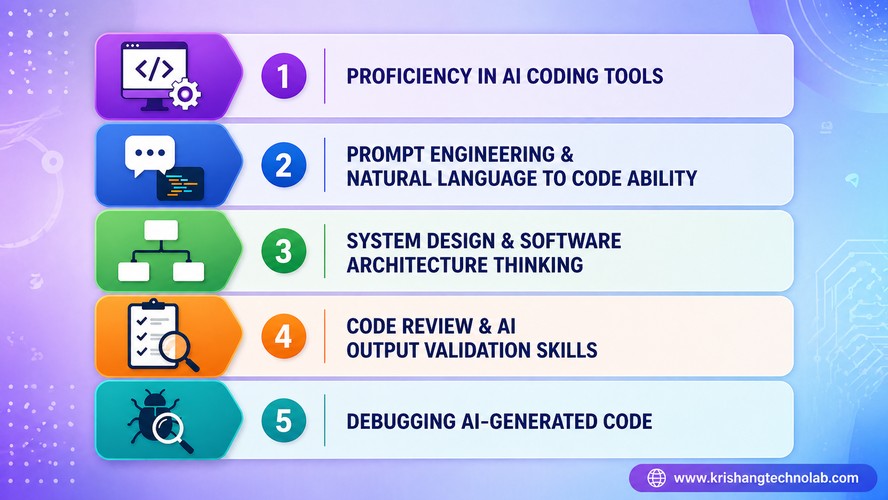
1. Proficiency in AI Coding Tools (Cursor, Copilot, Windsurf, Bolt.new)
Top vibe coders know more than one tool; they speak several and know which one to pick up in any situation:
- Cursor: Suitable for incremental development with a sense of codebase context
- GitHub Copilot: Integrated deeply with your existing workflows and repositories
- Windsurfing: Best for team-based collaborative AI development
- Bolt.new: Fast MVP web application prototyping
- Lovable: Design to code workflows with visual AI support
- Claude / ChatGPT: Higher-level reasoning, system architecture, documentation
Have candidates walk you through their tool stack. Strong vibe coders have strong opinions about when and why they use the tools.
If you’re looking for developers who are already proficient in these AI vibe coding tools, look for a team that offers ChatGPT integration services and has a thorough knowledge of the broader AI development environment.
Related to Read: Best AI Coding Assistants
2. Prompt Engineering & Natural Language to Code Ability
Prompt engineering is the art of talking to AI so that you get consistent, high-quality output. This is a real technical skill; it’s not something that everyone can do well.
A good vibe coder can:
- Decompose a complex feature request into precise, stepwise prompts
- Provide the right context (existing code, constraints, edge cases) upfront
- Iterate on prompts when the AI output misses the mark
- Write reusable system prompts for recurring development tasks
- Know when NOT to use AI and write code manually
Hiring prompt engineers with a proven track record doesn’t just get you someone who writes good prompts; it gets you someone who can dramatically improve the efficiency of your entire AI development pipeline.
Also Read: Fundamental Elements of Prompt Engineering
3. System Design & Software Architecture Thinking
That’s why there’s a big advantage to experienced engineers over novices in vibe coding. AI can write code, but it won’t design a system. Deep human experience is still required in architecture decisions, database schemas, API contracts, microservice boundaries, and scalability planning.
According to Stack Overflow’s data, hiring of junior developers has declined almost 20% from its peak, while demand for senior engineers with architectural expertise has increased roughly 9%. Vibe coding does not lower the bar; it raises it.
Identify candidates who can:
- Design scalable system architectures independently of the tools they use
- Understand trade-offs in database design, API design, and infrastructure
- Make decisions about when to modularize, when to simplify, and when to refactor
- Articulate the “why” behind every technical decision
Full-stack experience is often a good way to get good at architecture. This is why a lot of businesses hire full stack developers who are fluent in AI: they have knowledge of both the front end and the back end, which is very helpful when keeping an eye on AI-generated code across a whole codebase.
4. Code Review & AI Output Validation Skills
According to the 2025 GenAI Code Security Report, about 45% of AI-generated code had bugs, and some of them were grave security holes. For example, cross-site scripting was one of the most common issues that AI tools missed 86% of the time. This shows how important it is to carefully read and test the code before putting it into production.
The work that AI does is like the first draft that a junior developer turns in. It’s useful, but not ready for production until it’s been looked over. These instruments need to be able to find the following:
- Identify logical errors, security vulnerabilities, and performance problems in AI-generated code
- They should comprehend the code they are deploying, rather than merely executing it and relying on chance.
- Manual security best practices where AI is lacking
- Thoroughly review AI-generated code that is going into production
5. Debugging AI-Generated Code
More than 67% of developers claim they spend more time debugging code generated by AI than writing it themselves. That’s one of the hidden costs of vibe coder gone wrong.
The best vibe coders are great debuggers. They can trace errors in the AI’s logic output, identify where the AI made mistakes, and resolve issues without simply re-prompting the AI repeatedly.
Debugging skills differ for each language and framework. If your product is Python-heavy, it’s worth specifically looking at Python developers who also understand AI-assisted development. The combination of deep language expertise and AI fluency is rare and extremely valuable. If your stack is JavaScript-based, Node.js developers with Vibe coding experience will deal with AI-generated backend code far more reliably than a generalist.
Red Flags to Watch Out for When Hiring Vibe Coders
There are fake vibe coders among those who say they “use AI tools.” During the hiring process, keep an eye out for these red flags:
They Can’t Explain Their Own Code
If a candidate shows you a project that they built with AI help, but they can’t tell you what the code does, how it works, or why they made the choices that they did, that’s a huge problem. You deploy code you don’t understand and suffer security breaches and outages.
Overreliance on a Single AI Tool
They depend excessively on a single AI tool for all tasks. Too much dependence on one AI tool can reveal a shallow fluency, as it limits the ability to adapt to different situations and may lead to vulnerabilities in security and functionality. Great vibe coders have a broad toolkit and know the advantages and disadvantages of each.
They’ve Never Caught a Serious AI Error
Ask straight up, “Tell me about a time the AI generated something wrong or dangerous that you caught before it shipped. If they can’t answer this question, they haven’t done real projects or they’re not reviewing AI output carefully.
They Treat AI as Infallible
Blindly trusting AI-generated codes is one of the biggest risks in modern development. The best vibe coders are healthy skeptics; they use AI as a force multiplier, not a replacement for critical thinking, and they ensure that their projects incorporate custom architecture decisions rather than relying solely on low-code or AI tools.
No Evidence of Architectural Thinking
Be cautious if their portfolio consists entirely of projects built from scratch using low-code or AI tools without any custom architecture decisions. You want developers who can create systems, not just create them.
Weak Prompting and Communication Skills
Poor communication skills. Prompt engineering is communication at its heart. If developers are bad at explaining their ideas in conversation, they will be bad at prompting AI tools, which will create confusion in collaborative settings.
This is especially important for AI developers at startups, where every hire counts and there is no room for someone who ships unreviewed AI output. For startups, the fastest way to a reliable AI-first team is to hire dedicated developers with a pre-vetted vibe and coding record instead of rolling the dice on unvetted candidates.
Best Interview Questions to Test a Developer’s Vibe Coding Ability
These questions are meant to separate the people who actually understand vibe coding from those who just know the buzzword.
Technical Questions
- How would you use Cursor/Copilot to build a REST API from scratch?
- What security issues have you seen in AI-generated code, and how do you catch them?
- How do you handle AI-generated code that works but isn’t scalable or maintainable?
- How would you prompt AI to refactor a legacy codebase?
- When do you avoid AI coding tools and code manually instead?
Problem-Solving Questions
- How would you turn a vague feature request into an effective AI prompt?
- Can you review AI-generated code and identify bugs or flaws?
- How would you design a SaaS product using AI-assisted development end-to-end?
Practical Evaluation
- Can you show how you use Cursor/Copilot/Windsurf in a real project?
- What’s the most complex problem you’ve solved with vibe coding?
Quick Comparison: Top Vibe Coding Agencies at a Glance
| Agency | Best For | First Delivery | Location | Standout Feature |
| Krishang Technolab | Full-stack AI teams, MVPs, SaaS | Agile sprints | India / Global | Widest AI service suite |
| Devvela | Fast MVP, startups, B2B | 14 days | Remote / Global | Pay-per-milestone model |
| BorderlessMind | Enterprise, global team building | 48 hrs (talent match) | USA + Global | Top 5% vetted talent |
| Excellent Webworld | Regulated industries, code cleanup | Days (PoC) | India / Global | Vibe coding cleanup service |
| AI People Agency | Specialist AI/vibe coding roles | Custom | Global | AI-native hiring focus |
Top Agencies to Hire Vibe Coders Developer
Half the battle is finding the right vibe and coding partner. These top five agencies have a reputation for AI-first development, each with a different approach to help you hire vibe-coding developers who can actually deliver in production, not just demos.
1. Krishang Technolab — Best for Dedicated AI-First Teams & Full-Stack Vibe Coding
Krishang Technolab is a trusted partner in AI-powered development with deep full-stack engineering and vibe-coding expertise. Vibe coding developers write reliable, scalable, and intelligent software with tools like GitHub Copilot, Cursor AI, and Claude, with every line reviewed by human engineers before it ships.
What is special about Krishang Technolab is the service range. And not only vibe coders. You get the whole talent suite. Hire AI developers. Hire prompt engineers. Generative AI development. ChatGPT integration services. Offshore development center models. All under one roof. That makes Krishang a good fit for companies that want a long-term AI development partner, not a one-off hire.
- Engagement Models: Dedicated (full-time), part-time, hourly, project-based
- Minimum Duration: 1 Month
- Methodology: Agile / SCRUM | Daily Updates | Email, Chat, Phone
- AI Tools Used: GitHub Copilot, Cursor AI, Claude, ChatGPT
- Performance Review: 4.9/5
Key Strengths:
- AI-First Full-Stack Delivery Team
- Human-Reviewed AI Development
- Flexible Hiring Models
- Strong Generative AI & LLM Expertise
- Scalable MVP-to-Enterprise Support
- Transparent Communication & Agile Execution
- Cost-Effective Global Delivery
Key Services:
- Hire Vibe Coding Developers: AI-powered web, mobile & SaaS development
- Hire AI Developers: End-to-end LLM and generative AI engineers
- Hire Remote Developers: Time-zone flexible, remote-first talent
- Software Development Outsourcing: Full project delivery at scale
- Machine Learning Development: involves creating custom machine learning (ML) models and integrating artificial intelligence (AI) features into applications.
Best for: Businesses seeking a trustworthy AI-first development team from MVP to enterprise scale with transparent pricing and dedicated project support.
2. Devvela — Best for Fast MVP Delivery & First Release in 14 Days
The Devvela vibe coding agency pairs senior engineers with AI coders to make web and mobile apps faster and cheaper. The senior engineers have more than 10 years of experience. Their model gets rid of big teams and long deadlines; their main service is a first release that works in 14 days.
- Engagement Models: Fixed-price milestones, Weekly sprints, Staff augmentation
- AI Tools Used: Claude Code, Cursor, GitHub Copilot, Windsurf
- Performance Review: 4.8/5
3. BorderlessMind — Best for Hiring Top 5% Global Vibe Coding Talent
From 1999 to now, BorderlessMind has been helping companies build remote engineering teams as a top global talent provider. They now offer pre-screened vibe coding engineers from the US, India, Latin America, Canada, and Eastern Europe as of 2026. This makes them one of the most geographically diverse hiring partners on this list.
- Engagement Models: On-demand, Fractional, Offshore, Nearshore, Dedicated Teams
- Performance Review: 4.8/5
4. AI People Agency — Best for AI-Native Talent Matching & Specialist Roles
AI People Agency’s only job is to connect companies with developers, prompt engineers, and vibe coders who have built their careers around AI-assisted workflows from the ground up. They knows that when it comes to vibe coding hiring, a candidate’s ability to use AI tools, their quick engineering discipline, and their code review mindset are much more important than how well they do on a traditional coding test.
- Engagement Models: Contract, Full-time placement, Team builds
- Performance Review: 4.7/5
5. Excellent Webworld — Best for Rapid AI-Assisted Development Across Industries
Excellent Webworld brings more than 13 years of experience making traditional software to the world of vibe coding. Their model combines skilled developers with the AI tool of your choice to provide working proof-of-concepts in days and production-ready MVPs in weeks. They focus on clean architecture, scalability, and support after the launch.
- Engagement Models: Dedicated, Part-time, Project-based, Hourly
- AI Tools Used: GitHub Copilot, Cody, ChatGPT plugins, Cursor, Lovable
- Performance Review: 4.8/5
How Much Does It Cost to Hire a Vibe Coder Developer in 2026?
Vibe coder developer rates vary greatly based on experience, location, and engagement type.
Full-Time Salaries (Annual, USD)
| Role | United States | Western Europe | Asia-Pacific |
| Junior AI Developer | $75K – $100K | $50K – $75K | $20K – $45K |
| Mid-Level Vibe Coder | $110K – $150K | $75K – $110K | $40K – $70K |
| Senior AI Engineer | $150K – $220K | $100K – $160K | $60K – $100K |
| AI Architect / Lead | $200K – $300K+ | $140K – $200K | $80K – $130K |
Cost-Saving Strategies
Hire globally via an offshore model. The Asia-Pacific region has the biggest share of vibe coding adoption (40.7% of global usage), and talent costs are much lower. An offshore development center lets you hire senior AI engineers for 40–60% less than you would pay to hire them in the US or UK, without sacrificing quality.
Outsource to a specialist partner. By outsourcing software development to a partner with vetted AI-first engineers instead of trying to build your own in-house recruitment function from scratch, you’ll get to market faster and take the risk of mis-hire out of the equation.
Use white-label development for agency work. If you’re an agency that needs AI development capacity without adding permanent headcount, white-label web development allows you to scale AI project delivery without scaling your payroll.
Hire pre-vetted, not juniors. Spending on senior talent upfront usually saves money on debugging, security incidents, and rework, especially since 40% of junior developers are deploying AI-generated code they don’t fully understand.
Vibe Coding Developer vs. Traditional Developer: Who Should You Hire?
This is one of the most common questions hiring managers ask 2026. Here’s the honest breakdown.
| Factor | Vibe Coding Developer | Traditional Developer |
| Development Speed | 51% faster on average | Slower, but highly deliberate |
| Code Quality | Variable — requires strong review practices | More consistent baseline |
| Security Awareness | Must be explicitly verified | Often baked into training |
| Architecture Skills | Critical — must be verified | Generally strong |
| Cost | Higher demand = higher rates | Broader talent pool |
| Best For | Rapid prototyping, MVPs, AI features, fast-moving startups | Long-term codebases, regulated industries, complex legacy systems |
The honest answer is that 2026 will be the year with the greatest developers. The best engineers use AI tools to go faster but apply deep traditional engineering judgment to govern the output. Both extremes are a risk when hiring: a developer who refuses to use AI tools at all or one who just blindly ships AI output.
Focus on hiring experienced engineers who fully embrace AI-assisted workflows while maintaining strong engineering principles. When you hire dedicated developers from a specialist partner, you’ll get just this profile: engineers who know how to use AI tools well and apply real architectural thinking to every single project.
How to Onboard and Manage Vibe Coder Developers on Your Team
Hiring a great vibe coder is only half the battle won. And so do onboarding and management practices.
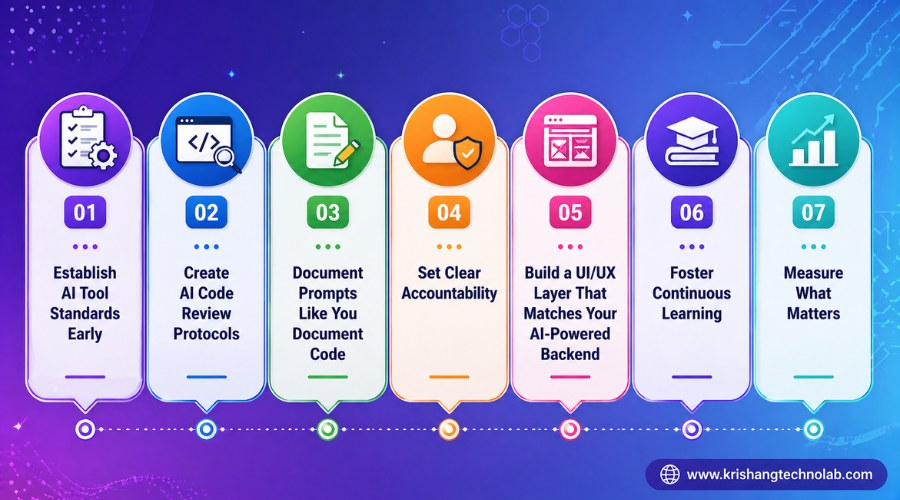
1. Establish AI Tool Standards Early
Describe the tools your team uses and why you use them. A core set of tools (Cursor for writing code, Claude for planning architecture, and GitHub Copilot for help in the editor) helps make things more consistent and code reviews easier.
If you’re building a product with AI, get AI consulting services early on. This means you can establish the right tool stack, governance policies, and AI usage guidelines before you hire anyone, rather than having to change them once the team is already in place.
2. Create AI Code Review Protocols
Set clear rules for reviewing the code generated by AI before merging it. This should include a security scan, an architectural review, and a clear process for signing off. AI output should be treated like work from a skilled but inexperienced contractor: it should always be reviewed before it is approved automatically.
3. Document Prompts Like You Document Code
Save and share effective prompts in a shared library so your team can learn. Prompt templates for common tasks (API generation, test writing, refactoring, documentation) are a real team asset. If you hire prompt engineers on your team, have them build and maintain this library.
4. Set Clear Accountability
The code that the AI made is still your team’s. Everyone who works on the project should feel like they own what they send out, even if AI wrote the first draft. This stops people from thinking “the AI did it,” which is how vulnerabilities that haven’t been checked get put into production.
5. Build a UI/UX Layer That Matches Your AI-Powered Backend
Since AI speeds up development on the back end, the front end is often the one that slows things down. You should work with UI/UX designers who know how AI products work and can make user interfaces that make it easy for end users to use AI features. This will keep your UI fresh.
6. Foster Continuous Learning
The world of AI tools is changing quickly. Developers should show off new tools, techniques, or prompting strategies at regular knowledge-sharing sessions. When teams learn together, they get ahead faster.
7. Measure What Matters
Track metrics that reflect the real value of vibe coding: time-to-feature, bug escape rate, frequency of security incidents, and cycle times for code reviews. If you’re not seeing productivity gains in these numbers, your vibe coding workflow needs a boost.
Also Read About: AI Tools for Startups
Future of Hiring in the Age of Vibe Coding
The hiring landscape is changing in ways that will only accelerate through 2026 and beyond.
AI Fluency Is Becoming a Baseline Requirement
AI fluency is no longer a differentiation; it’s a requirement. More and more, job postings that don’t mention AI tools will only get responses from developers who are behind the times.
Developer Roles Are Splitting Into Two Tiers
One role for developers is being split into two. At the bottom are simple coding tasks that AI can do almost entirely on its own. At the top are system design, architectural governance, quick engineering, and making sure that AI output is of high quality. Developers who can work at the highest level will get paid a lot.
Global Talent Competition Is Intensifying
Global talent competition is intensifying. Now that working from home is common and AI tools let people work together at different times, the best vibe coders in the Philippines, India, Eastern Europe, and Latin America are competing directly with developers in San Francisco and London. Companies that use global capability centers can access this pool of talent from around the world at a much lower cost.
Security and Governance Skills Are Premium
Security and governance expertise is becoming a rare premium skill. The data from Veracode shows that code made by AI poses big security risks. Some of the most valuable developers on the market right now are those who are good at vibe coding and also know a lot about security.
Generative AI Development Is Becoming Standard
Generative AI development is no longer optional. Businesses that don’t add AI-based features to their goods are already falling behind their rivals. In 2026, building with generative AI will be the norm, whether it’s done by generative AI development services or in-house AI teams.
AI-First Engineering Will Define Future Hiring
“AI-first engineering” will be the standard job title within three years. With AI tools proliferating as much as version control, the line between vibe coders and traditional developers will continue to blur. The expectation is that every serious developer will use them effectively.
Ready to Hire Expert Vibe Coding Developers?
Build faster with AI-first developers skilled in Cursor, Copilot, prompt engineering, and scalable software delivery.
Talk to Our Experts TodayConclusion: Build a Smarter Team with the Right Vibe Coding Talent
Hiring developers who understand vibe coding is no longer a competitive advantage in 2026; it’s becoming a prerequisite to building software at the speed the market demands.
The companies that are winning now aren’t the ones that adopted AI tools early on. They hired the developers who could wisely wield those tools with architectural thinking, security awareness, fluency in prompt engineering, and critical judgment, knowing when not to trust the output.
Use this guide to:
- Rewrite your job descriptions to attract AI-fluent engineers.
- Update your interview process to test prompt engineering and code review skills.
- Know where to locate the best vibe-coding talent globally
- Set the right pay benchmarks for your region and engagement type
- Build team culture that governs AI output responsibly
If you need to hire vibe coder developers for a single product sprint, to hire AI developers to build a full AI-powered platform, or to set up an offshore development center for long-term AI engineering capacity, the right talent is out there.
The next generation of software developers are already building faster, shipping smarter, and thinking bigger. Go get them.
Found this post helpful? Don't forget to share it with your network!