
Quick Overview: Explore white label software development costs, pricing models, and development expenses. Compare custom software, SaaS solutions, and rebranding costs while discovering budget-saving tips, hidden charges, and expert insights to choose the right software development approach for your business.
White Label Software Development can cost from $5,000 to over $500,000 in 2027. Your price depends on scope, rights, features, and team location. A simple rebrand costs far less than a new platform.
“White label” means that one firm builds a product and another sells it. The seller then adds its name, logo, and price. You can reach the market much sooner.
A low quote doesn’t always mean a low total cost. Moreover, hosting, licenses, updates, and safety work can inflate your annual bill. So before you sign, check out the total cost of ownership. The total cost of ownership covers launch, upkeep, and exit costs.
This guide shows prices by project size, product type, features, and pricing model. It compares India with the USA and works through a sample budget. You will also learn which hidden costs to check before signing.
The figures range from public market guides to common project estimates. Treat them as a starting point rather than a fixed quote. Your white label software development partner should price your exact scope after a short study. Fewer surprises, more confidence in the decisions you make.
How Much Does White Label Software Development Cost in 2027?
A SaaS rebrand generally costs in the range of $5,000 to $60,000 and may take a few weeks. An agency build can cost anywhere between $50,000 and $500,000 depending on the size of the team and the complexity of the project. Custom white label software development may start near $150,000 when you own the full product. Each route trades speed against control, so match the budget to the way you plan to sell.
To understand which option fits your business, consider the features you need, your expected customer base, and your long-term plans. A ready-made SaaS product works well when you want to launch quickly with a limited budget. An agency build offers more flexibility, while custom development gives you greater control over features, branding, and source code. Comparing these options helps you make a practical investment decision.
Average White Label Software Development Cost by Project Size
The cost of white label software development varies based on project size, features, and technical complexity. A small MVP requires less investment, while a mid-size or large platform needs more development time, resources, and testing. Here’s a breakdown of estimated costs and timelines. These estimates can help you plan your budget and choose a development approach that aligns with your business goals.
| Project size | Estimated cost | Timeline |
| Focused MVP | $10,000 to $30,000 | 8 to 16 weeks |
| Mid-size platform | $40,000 to $80,000 | 4 to 7 months |
| Large platform | $100,000 to $500,000+ | 7 to 12 months |
How Much Does White Label Software Cost Per Month?
Custom platform upkeep often runs $500 to $5,000 a month. A rented CRM may charge $15 to $150 per seat. Some white label software companies also charge setup fees. A white label software development company may charge them too. Always check which services are included in the monthly fee to avoid unexpected expenses as your customer base grows.
White Label Software Development Cost in India vs. USA
The cost of white label software development varies between India and the USA due to differences in developer rates, team experience, and operating expenses. India often offers more budget-friendly development services, while US-based teams may charge higher rates. Compare technical expertise, project quality, communication, and long-term support before choosing a development partner.
| Region | Mid-level hourly rate | Cost for 600 hours |
| India | $20 to $52 | $12,000 to $31,200 |
| USA | $85 to $135 | $51,000 to $81,000 |
Many firms hire software developers through offshore development in India. This approach helps businesses reduce development expenses without compromising essential quality. Indian development teams offer experience across SaaS platforms, mobile apps, and custom solutions. However, always review their portfolios, communication process, and post-launch support before making a decision.
White Label Software Development Cost by Type
Product type sets your base price because each category carries its own rules, data, and user journeys. While two products can have the same login and billing screens, the fees for white label software development differ based on type. A booking tool might need calendars and reminders; a finance product would need more rigorous record keeping and auditing. Compare quotes within the same category. Mixed comparisons can hide large scope gaps.
Common types of white label software include:
- CRM Solutions: Manage customer relationships, sales pipelines, and business interactions.
- SaaS Platforms: Offer subscription-based software under your own brand.
- Mobile Applications: Launch branded apps for iOS and Android users.
- E-commerce Platforms: Build online stores with payment and inventory features.
- ERP Systems: Manage business operations, resources, and workflows.
- AI-Powered Solutions: Offer AI chatbots, automation tools, and intelligent business applications.
CRM Solutions: White Label Development Pricing
Custom CRM costs around $20k to $90k depending on pipeline depth and reporting requirements. The first release is usually contact records, deal stages, and email tools. Automation, call tracking, and client billing push the figure toward the higher end. A rented plan lowers your initial payment, but seat fees increase with your team and customer list size. Model both paths over three years.
SaaS Platforms: Estimated White Label Development Costs
A SaaS platform often costs $30,000 to $150,000 for the first full release. Subscription billing, tenant controls, and admin panels drive much of that figure. Each pricing plan also needs rules for upgrades, failed payments, and cancellations. Usage limits and detailed reports add further work. Start with one clear plan and customer type. Then we can expand the offer as real accounts reveal new needs.
Mobile Applications: White Label Development Expenses
Basic apps cost $2,000 to $10,000, while mid-range apps reach $50,000. Large apps can pass $150,000. White label app development companies may charge per brand. White-label mobile app development services should clearly price store publishing. Additional costs may include app maintenance, security updates, and integration with third-party tools. The number of supported platforms, such as iOS and Android, can also affect the overall development budget.
E-commerce Platforms: White Label Software Pricing
A branded store costs $15,000 to $100,000. The testing time includes payment gateway integration and seller tools. The final cost depends on features such as inventory management, order tracking, customer accounts, and shipping integrations. Advanced options like multiple seller dashboards and automated reporting can increase development expenses. Choose features based on your business model and expected store growth.
ERP Systems: White Label Development Investment
ERP projects often cost $50,000 to $250,000 or more. An artificial intelligence software development company can enhance its services by incorporating forecasting capabilities through AI development. The overall investment depends on the number of business processes, departments, and integrations involved. Custom reporting, inventory tracking, and automated workflows can also increase development costs.
AI-Powered Solutions: White Label Development Budget
AI products often cost $25,000 to $200,000. An AI white label chatbot sits near the low end. Custom AI development costs more. Before you hire AI developers, define your data and goal. An artificial intelligence software development company can test model quality. An AI software development company needs clean data. The final budget also depends on model complexity, data preparation, computing resources, and ongoing model maintenance.
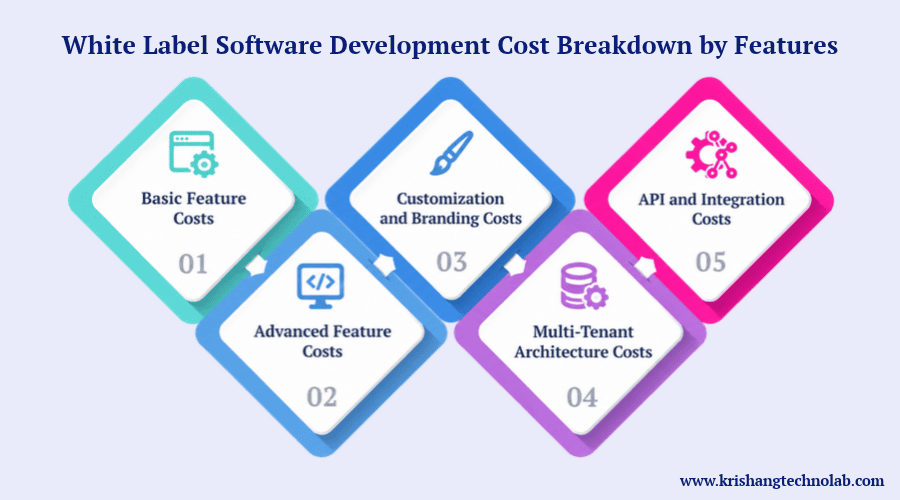
White Label Software Development Cost Breakdown by Features
Features often change a quote more than design does, since every function needs logic, screens, and tests. White-label software solutions offer flexibility, where differences in brands are settings, not work. After you’ve sorted your list into launch needs and later ideas, ask for prices. This step provides a common target for all vendors and also allows for easier side-by-side comparison of estimates.
A clear feature list also helps developers estimate time, resources, and costs more accurately. It reduces misunderstandings, prevents unnecessary changes, and keeps your project aligned with its planned budget.
1. Basic Features That Affect Development Costs
Logins, user roles, dashboards, and alerts may cost $5,000 to $20,000 together. White label software companies often reuse these parts, which can shorten the first release. Reuse does not remove all effort, though. Each role still needs clear permissions, and every alert needs a trigger and message. Could you clarify which items are ready and which items the team needs to build from scratch?
2. Advanced Features That Increase Development Costs
Live chat, custom reporting, and workflow automation will cost between $10,000 and $60,000. They depend on clean data, clear rules, and careful testing on many cases. You may need to hire AI engineers to tune the model. You can even hire AI developers for chat features. Add advanced items only when they save users time or give you a reason to charge more.
3. Customization and White-Label Branding Costs
Logo, color, and domain changes cost about $2,000 to $8,000 in many projects. Good white label software solutions change these items through simple settings instead of new code. Branded emails, invoices, reports, and mobile icons mean more work. A white label software development agency can take care of this setup. Review every screen and message, as a missed vendor name can damage client trust.
4. Multi-Tenant Architecture and Database Costs
Multi-tenant design lets many brands share one platform while each brand sees only its own records. Better tenant isolation is pricier to host on separate databases. Shared databases are cheaper to host. Tight controls on access are put in place by expert white-label software engineering to keep all client data separate. Good white-label software engineering also protects logins. Decide this early, since changing the data model later can mean an expensive rebuild.
5. Third-Party API and Software Integration Costs
One simple link between tools may cost $1,000 to $5,000. Hire dedicated software developers who know your tools. Complex integrations involving multiple platforms, custom data flows, or real-time syncing can increase development costs. Before starting, identify the tools your business already uses and confirm API compatibility. This helps avoid technical issues and unexpected expenses during development.
White Label Software Development Pricing Models
The pricing model you choose shapes your bill for white label software development as much as the feature list. Each option divides risk differently between you and the vendor. One price is needed for a stable scope, and flexible billing is needed to change plans. Review payment stages, change rules, and exit rights before signing. The right model should match how certain you are today.
Fixed-Price Development Model
A fixed price suits a stable scope. Each change can add cost. White Label Software Development Companies often ask for a firm scope. This model helps you plan your budget because the total project cost is agreed upon before development begins. Payments are usually divided into milestones, such as design, development, testing, and launch. It works best when requirements, deliverables, and deadlines are clearly documented in the contract.
Hourly-Based Development Model
Hourly billing is suitable for projects where the scope may change. Set a monthly cap when you hire software developers this way. Hire dedicated developers on a monthly basis. Hire AI engineers. This approach gives you flexibility to add or update features as your business needs change. You pay only for the actual hours worked, making it useful for ongoing improvements. However, track working hours and project progress regularly to keep spending under control.
Dedicated Development Team Model
If you have long-term plans, consistent releases, and knowledge of the product, you can hire dedicated developers. A white label software development agency can work for you under your brand with its own project lead. You may instead hire software developers for short gaps. Staff augmentation adds people to your team, so your managers set daily tasks. First, confirm monthly rates, notice periods, and replacement terms.
SaaS Licensing and Subscription Model
You pay per seat, client, or use. The seller usually keeps the source code. Some white label software solutions work this way. This model requires a lower upfront investment and makes it easier to launch without managing the entire development process. However, monthly or annual subscription fees can increase as your customer base grows. Review renewal terms, usage limits, and additional charges before choosing a provider.
Revenue-Sharing Model
White label software companies set different revenue caps, so check the limit. Under this model, you share a percentage of your earnings with the software provider instead of paying the full development cost upfront. It can be useful for startups with limited budgets and growing customer bases. Before signing, clarify the revenue percentage, payment schedule, and contract duration to understand your long-term expenses.
Factors That Affect White Label Software Development Costs
Nine factors explain why two quotes for a similar idea can differ widely. Scope, features, technology, design, team skills, integrations, compliance, growth, and timing all play a part. White label software companies may also assume different levels of testing or support. Ask each vendor to list those assumptions in writing. A lower total often means that something important sits outside the quote.
Software Complexity and Project Scope
Write the scope down. Your white label software development partner can map each step. A clear project scope helps developers understand your business goals, required features, and technical expectations. It also makes cost estimation easier and reduces confusion during development. Well-defined requirements can prevent unnecessary changes and delays later.
Number of Features and Functionalities
Each new feature adds design, coding, and testing hours. They also look at data and precision in AI development. Advanced features such as automation, real-time notifications, analytics, and reporting require additional development effort. Prioritize the functions your customers need most. You can introduce extra features in later updates as your business grows.
Technology Stack Selection
Some of the tools that will impact the hiring and hosting costs will be React, Flutter, Node.js, and AWS. Each technology has different development requirements, hosting needs, and maintenance considerations. The right stack should support your expected traffic and future business growth. Discuss the available options with your development team before making a decision.
UI/UX Design and Custom Branding
New user journeys cost more than ready templates. Custom dashboards, navigation, layouts, and branded elements require additional design and development time. A consistent interface also helps customers recognize your brand and use the platform easily. Focus on simple navigation and a smooth user experience rather than unnecessary visual features.
Development Team Size and Expertise
Senior experts charge more but may work faster. Before you hire software developers, look at their previous work. Hire AI engineers with proven skills. Or hire AI developers. An experienced team can handle complex requirements and identify technical issues early. The right mix of developers, designers, and testers also improves project coordination. Compare team experience and communication skills before making your final decision.
Third-Party Integrations
Third-party API integrations need setup and later updates. An AI software development company can plan them. Common integrations include payment gateways, CRM systems, email platforms, and analytics tools. Each connection requires proper configuration and testing to ensure smooth data exchange. Choose integrations that support your business operations and avoid adding unnecessary tools.
Security and Compliance Requirements
Rules like GDPR, HIPAA, PCI DSS, or SOC 2 add controls and audits. Ask your AI software development company about it. Security measures such as data encryption, access controls, and regular vulnerability testing also affect development costs. The required protections depend on the type of information your platform handles. Planning security early helps prevent expensive changes and protects customer information after launch.
Scalability and Performance Requirements
Growth means load tests, caching, queues, and sound cloud design, especially when many brands share resources. White Label Software Development Services needs to have realistic traffic goals and a test plan. Good white label software engineering plans for real demand Heavy AI development work may need extra computing power too. Build for the next stage of growth, then add capacity when usage data supports it.
Project Timeline and Delivery Deadlines
You can hire dedicated developers to keep product knowledge. A shorter development timeline may require a larger team and additional resources, increasing the overall project cost. Tight deadlines can also affect testing, design reviews, and quality checks. Plan realistic milestones for each development stage to keep the project on track. Discuss delivery expectations with your white label software development partner to avoid unnecessary delays and extra expenses.
Hidden Costs of White Label Software Development
The price to launch is just the start of your spending. White label software development also involves recurring fees for hosting, licenses, monitoring, support, and upgrades. Some fees are flat on a monthly basis, while others scale up with each new user. Include them in your sales price from the first day. A growing client list can shrink your margin instead of improving your profit.
Software Maintenance and Updates
Yearly upkeep for custom software often equals 15% to 20% of the original build cost. That budget covers security patches, bug fixes, library updates, and small changes. Operating system releases and outside services can also force new work. Ask whether the fee includes a set number of hours. Before launch, there should be clear written rules on unused time, urgent requests, and major upgrades.
Cloud Hosting and Infrastructure
Hosting bills rise with users and traffic. Set up spend alerts, especially for AI white label tools. The overall cost also depends on storage capacity, server performance, and bandwidth requirements. Choose a hosting plan that matches your current usage and allows room for future growth. Review infrastructure expenses regularly to avoid paying for unused resources.
Security Monitoring and Data Backups
Ask how often the team tests data recovery. Regular security monitoring helps identify suspicious activities and potential vulnerabilities before they become serious problems. Automated backups also protect important business and customer information from unexpected data loss. Include backup frequency, storage duration, and recovery procedures in your maintenance agreement.
Third-Party API and Licensing Fees
Some services charge per call, message, or sale. An AI white label tool can also be charged by use. These recurring expenses can increase as your platform attracts more users and processes additional requests. However, check the pricing structure of every integrated service before launch. Keep track of usage limits and renewal terms to manage your ongoing budget.
Technical Support and Bug Fixes
A service level agreement defines fixed targets and response times. Such terms should be part of White Label Software Development Services. Technical support may include troubleshooting, error resolution, performance checks, and assistance with user issues. Some providers include basic support in their monthly plans, while others charge extra. Confirm the coverage hours and additional support fees before signing the contract.
Software Upgrades and Feature Enhancements
Over time, users ask for more. Save money for upgrades. There may be potential changes to the model in future AI development. You can hire AI developers or hire AI engineers for it. Regular upgrades also help your software remain compatible with new devices, operating systems, and third-party services. Plan a separate budget for improvements based on customer feedback and changing business requirements.
How Much Does It Cost to Maintain White Label Software?
Depending on provider terms, ready apps can run $1,000 to $10,000 a year to maintain. Custom platforms may need $500 to $5,000 a month for hosting and technical care. A white label software development company should separate fixed fees from usage fees in their pricing list. Review that list every quarter. You can then spot unused tools, rising service charges, and support hours you no longer need.
White Label Software Development Cost: Build vs. Buy vs. Rebrand
Choosing between building, buying, or rebranding software depends on your budget, business goals, and ownership requirements. Each approach offers different levels of customization, flexibility, and control. Understanding the initial investment, ongoing expenses, and source code rights can help you select the most suitable option for your business.
| Option | First cost | Code ownership |
| Buy and rebrand | Low | Seller |
| Agency build | Medium to high | Set by contract |
| Custom build | Highest | Yours, if agreed |
Is Buying Existing Software the Right Choice?
Yes, buying can be the right move if your needs are standard and you require it fast. You can test demand, learn what clients value, and avoid a large upfront payment. Even with white label software solutions, off-the-shelf tools can result in vendor lock-in. However, check the data export, renewal pricing, and feature limits early. These terms determine how easy it is to move later.
Why Choose a White-Label SaaS Solution?
A white-label SaaS solution offers a fast time to market and recurring revenue from monthly plans. Typically, the hosting, patches, and new releases are all handled by the provider for all brands. So your team can focus on sales, onboarding, and client service. The trade-offs are limited, particularly regarding the road map. Ask about how feature requests are prioritized and how much notice you’ll get before pricing or functionality changes.
Should You Invest in Custom White-Label Software Development?
Choose custom software development when the product gives you a clear edge that rented tools cannot match. Private label usually gives one seller sole rights to an adapted product. White-label software engineering for custom work needs clear terms. Put source code ownership in writing, along with cloud accounts and documents. Without these items, moving to another team becomes slow and costly.
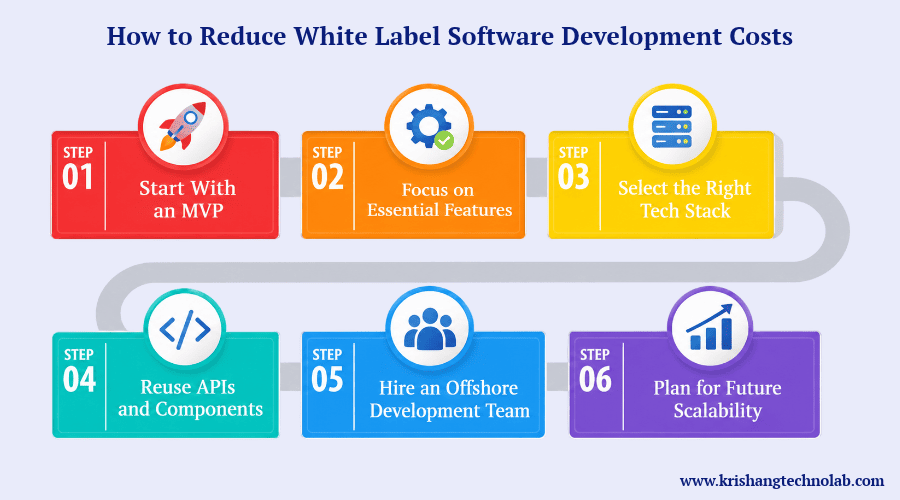
How to Reduce White Label Software Development Costs
You can lower costs without cutting quality when you control scope from the first meeting. An AI white label base can skip early model training and shorten the first release. Write down one main user, one core problem, and one measure of success. Delay every feature that does not serve them. This focus reduces design cycles, test hours, and expensive changes during build.
1. Start With a Minimum Viable Product (MVP)
Test a major problem with real users. Let their feedback guide your white label software development spend. An MVP allows you to launch with only the essential features instead of investing in a complete product immediately. It also helps you understand customer expectations and identify areas for improvement. Once you validate the idea, you can gradually expand the platform.
2. Prioritize Essential Features
Rank features by user value. Build the strongest ones. This is where white label app development companies can come in. Focus on features that solve customer problems and support your main business goals. Avoid spending money on advanced functions that users may not need initially. You can add more capabilities as your customer base and revenue grow.
3. Choose the Right Technology Stack
Top white label app development companies often share code across iOS and Android. The right technology stack can reduce development time and simplify future maintenance. Consider factors such as application performance, security, scalability, and developer availability. Discuss your business requirements with the development team before selecting any technology.
4. Reuse Existing APIs and Components
Use trusted tools to pay and log in. White label app development services often include tested parts. Reusing existing components can reduce development hours and help your team avoid building common functions from scratch. It also makes integrations easier when you choose reliable providers. However, check compatibility, licensing terms, and security before using third-party tools.
5. Work With an Experienced Offshore Development Partner
Offshore teams can lower your hourly spend. Many white-label software development companies offer flexible team sizes. You can also hire dedicated developers offshore. This approach gives you access to experienced professionals without the expense of building a full in-house team. Compare portfolios, technical skills, communication practices, and project management processes before selecting a partner. Also, confirm ongoing support and maintenance costs.
6. Plan for Scalability From the Beginning
Good white-label software engineering can prevent costly rebuilds. Solid white label mobile app development company plan for scalability. You can hire dedicated developers to build it. Consider future user growth, database capacity, cloud infrastructure, and application performance during the initial planning stage. A flexible architecture makes it easier to introduce new features and support more customers. This approach helps control long-term development and infrastructure expenses.
How to Calculate Your White Label Software Development Budget
Multiply hours by the rate. Add tools, hosting, and a reserve. Start by estimating the work required for discovery, design, development, testing, and deployment. Include recurring expenses such as software licenses, cloud services, and maintenance. A detailed estimate helps you understand the total investment before development begins.
Example: Calculating the Cost of a White-Label SaaS MVP
Suppose a team charges a mixed rate of $35 per hour. The project requires 600 development hours across different stages, including planning, design, coding, and testing. You can calculate the estimated cost for each stage by multiplying the required hours by the hourly rate. Here’s how the budget may look: This breakdown also helps you identify where most of your budget goes and plan resources more effectively.
| Work stage | Hours | Cost |
| Discovery | 60 | $2,100 |
| Design | 90 | $3,150 |
| Development | 360 | $12,600 |
| Testing and launch | 90 | $3,150 |
| Total | 600 | $21,000 |
Add a 15% reserve of $3,150. Plan for $24,150 before hosting and licenses. This additional amount provides a financial cushion for unexpected changes during development. You may need extra hours for bug fixes, testing, or minor feature adjustments before launch. Also, keep hosting, third-party API charges, and software licenses separate from the initial development budget. This approach helps you avoid surprises and manage your overall investment more effectively.
How to Choose the Right White Label Software Development Company
Compare proof, process, and contract terms. A white label software development partner should explain every cost. However, check live products from top white label app development companies. Match their white label software development services to your scope.
Some white-label software development companies publish case studies. For AI work, ask an AI software development company for tested results. An artificial intelligence software development company should explain model limits.
Questions to Ask Before Hiring a Development Partner
Before you sign, use these questions to compare each development team fairly and clearly. Ask for written answers. Clear answers show how each partner will manage code, safety, delivery, and future costs once your new product is live. Before making your final decision, also ask for clear details about ongoing responsibilities and project ownership. Consider discussing these additional points:
- Who owns the code and cloud accounts?
- Can we transfer the project to another development team if needed?
- What happens if the project misses its agreed delivery deadline?
- Will you sign an NDA?
- How do you test tenant isolation?
- Which fees continue after launch?
- Do you provide technical support and regular software updates?
Red Flags to Avoid When Comparing Development Quotes
“Carefully review all quotes to ensure there are no loopholes that will increase your project’s cost.” Missing details often cause costly disputes, long delays, and change fees. They can also erode your control over the product. Pay attention to how the development company explains its pricing, delivery commitments, and post-launch responsibilities. However, watch out for these additional warning signs when comparing proposals:
- No written milestone plan
- Unclear code ownership
- Missing upkeep costs
- No data export terms
- Unrealistically low quotes.
- No testing process.
- Unclear support terms.
Is White Label Software Development Worth the Investment in 2027?
Yes, it can be worth it if your sales plan relies on brand speed and control. Moreover, a white label software development agency can scale up without lengthy hiring processes. White Label Software Development Services vs. Hiring In-House for Several Years An AI white label offer also needs clear usage pricing. Test demand with a few paying clients before you commit to a large budget.
Another advantage is the ability to focus on business growth while the development partner handles technical tasks, updates, and maintenance. However, evaluate the total cost of ownership, customer demand, and future customization needs before investing. A well-planned approach can help you build recurring revenue while keeping development expenses under control.
Final Thoughts: Plan Your White Label Software Development Budget for 2027
In summary, white label software development costs depend on far more than a new logo. Your budget should reflect size, features, rights, and location. This should include hosting, maintenance, security, license fees, and upgrades at a later date.
Buy, rebrand, or build. The choice is yours. Moreover, make a list of the features you really need. A focused MVP test demands it before you spend much more.
Compare at least three detailed quotes for the same scope. White label software companies may price work in different ways. Totals alone can mislead you.
Read the contract with care. It should specify the ownership of code, data, designs, and accounts. It should include response times and exit procedures.
Select a white label software development partner that provides clear answers. We should be creating strong white label software solutions for the needs of today but also for growth.
Remember that a good budget protects your money, quality, and delivery dates. Do a short study and save money for changes. Don’t pay for features nobody needs.
Request an itemized quote and build in small stages. However, this plan gives you firm control over spending in 2027 and beyond.
Frequently Asked Questions About White Label Software Development Costs
How Much Does It Cost to Develop White-Label Software?
An MVP often costs $10,000 to $30,000. However, a white label software development company should confirm your range after a scope review. An AI software development company can price AI features. The final cost depends on the features, integrations, and level of customization required for your product.
What Is the Cheapest Way to Launch White-Label Software?
Renting and rebranding a ready product is often the cheapest. White label app development companies may bundle both with white label app development services. This option helps you launch quickly while keeping initial development and maintenance expenses relatively low.
How Long Does White-Label Software Development Take?
A rebrand may take two to eight weeks. An MVP often takes eight to 16 weeks. White-label mobile app development services must allow for store review. The actual timeline depends on project complexity, feature requirements, and the development team’s experience.
Is White-Label Software Cheaper Than Custom Software Development?
Often, yes, because white label app development services reuse a base. Heavy changes narrow the savings. This makes white-label solutions a cost-effective choice for businesses that need faster market entry with fewer development resources.
How Much Does White-Label SaaS Cost Per Month?
Top white label app development companies may offer seat plans from $15 to $150 monthly. White label app development companies may add usage fees. White label app development services can vary in quality and features. Always check setup fees, renewal terms, and user limits before choosing a plan.
Can I Own the Source Code of White-Label Software?
“Yes, you can own the source code if it is specified in the contract.” Ask your white label software development agency to confirm the arrangement in writing. White Label Software Development Companies may instead license code.
What Is the Average Cost of White-Label App Development?
White label app development companies often quote $10,000 to $50,000 for mid-range apps. Compare white label app development services by platform. Top white-label app development companies should show publishing fees. Also, consider ongoing updates and maintenance when comparing development quotes.
How Much Does White-Label Software Maintenance Cost?
Simple apps may need $1,000 to $10,000 each year. White label mobile app development services may charge separately for updates. The final maintenance cost depends on app complexity, user activity, and technical support requirements. Check whether bug fixes, security patches, and performance updates are included in the annual fee.
Is India a Good Destination for White-Label Software Development?
Yes, India offers wide talent and fair rates. You can hire AI developers or hire AI engineers there. An artificial intelligence software development company must provide evidence. However, check their previous projects, client reviews, technical expertise, and communication process before hiring. Also, confirm their ability to provide ongoing maintenance and support after launch.
Can I Launch White-Label Software With a $10,000 Budget?
Yes, with a rebrand or a tight MVP. An artificial intelligence software development company might recommend a small pilot. Start with essential features and use existing tools to keep initial expenses low. You can expand the software gradually as your customer base and revenue grow.
Found this post helpful? Don't forget to share it with your network!