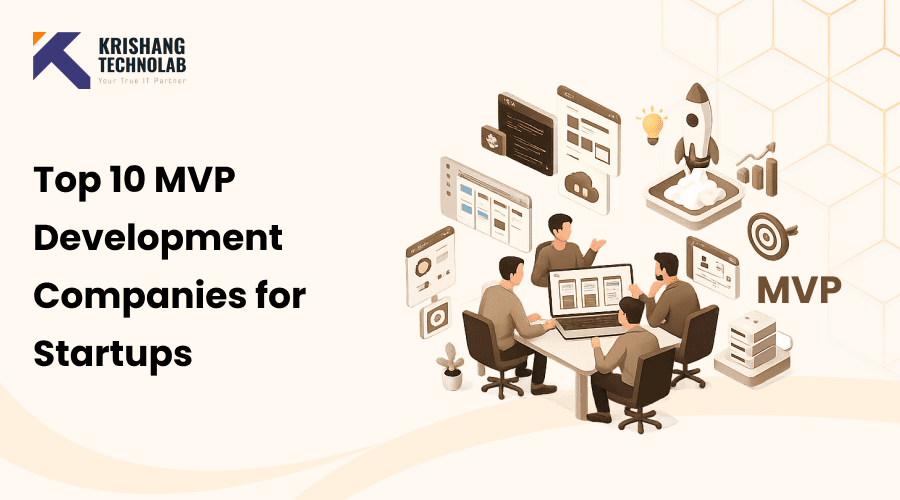
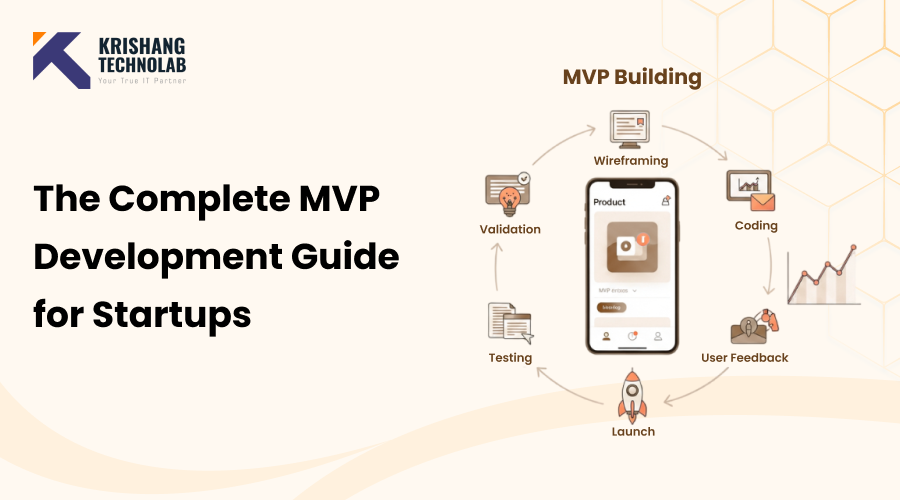
Quick Overview: Explore how startups can reduce risk, validate ideas, and launch products faster by building a Minimum Viable Product (MVP). Rather than investing heavily in a full-featured product, an MVP focuses on solving a core customer problem with minimal functionality, enabling startups to gather real user feedback and test market demand early. The guide explores different MVP types, including single-feature, no-code, low-code, landing page, concierge, and crowdfunding MVPs, while highlighting essential elements such as a clear value proposition, simple user experience, and reliable performance.
Great opportunities and tough challenges are ahead in starting a startup. Markets are changing at an unprecedented rate, customer expectations are constantly rising and the competition is getting ever more fierce. One of the biggest questions still facing founders is:
“How do you best go about building a product that meets the needs of your customers, and does so in the most efficient manner with the use of your time and resources?”
The solution is often in creating MVP ( Minimum Viable Product ).
An MVP allows startups to test ideas quickly, get real user feedback and assess market demand before investing heavily in full-scale development. Many successful companies started as simple MVP and grew to become industry leaders.
This guide covers everything about MVP development for startups including the development process, costs, best practices, common mistakes and future trends.
What Is an MVP?
A Minimum Viable Product is the simplest version of a product that solves a core problem for users. Instead of building every feature at once, startups focus on creating the most important functionality and releasing it quickly.
The goal is simple: learn from real users before investing heavily in full-scale development.
Many successful companies started with an MVP.
Examples include:
- Airbnb started with a simple website offering room rentals.
- Dropbox validated demand with a demo video before building the full product.
- Uber launched with a basic app connecting riders and drivers in one city.
These companies focused on learning before scaling.
Why MVP Development Matters for Startups in 2026
One of the major reasons startups fail is building products that people don’t genuinely need. According to CB Insights 35% of startup failures are related to a lack of market demand. That’s why MVP development helps founders verify concepts before putting large investments on the line.
Faster Time to Market
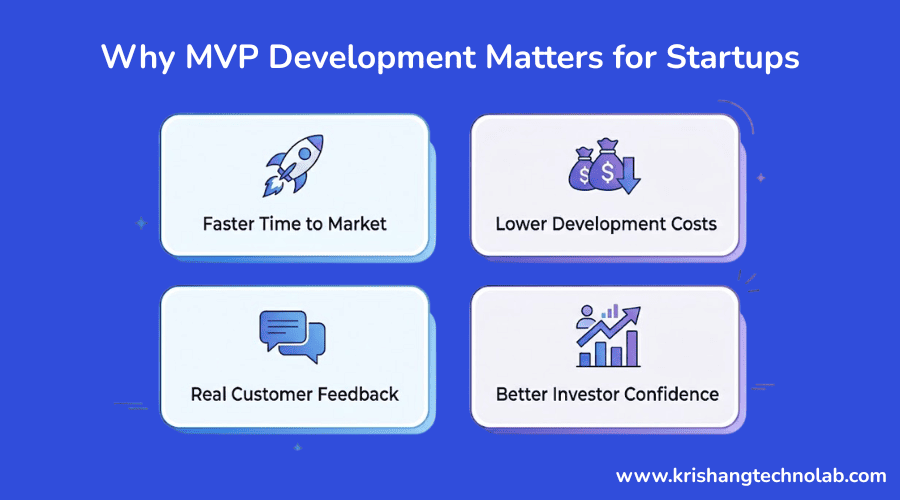
Speed is everything in 2026. Plus, markets move fast and competitors can pop up overnight. An MVP gets startups to market in weeks, not months. That allows them to learn from users immediately.
Lower Development Costs
It takes many resources to build a full product. On the other hand, startups can reduce by focusing on the essentials:
- Development costs
- Design expenses
- Maintenance requirements
- Operational risks
Related to Read : Breaking Down Website Maintenance Costs in 2026
Learn what drives website maintenance costs and how to budget smarter this year.
Real Customer Feedback
Assumptions are a dangerous thing. For example, an Minimum Viable Product provides real user feedback. This process helps founders to understand:
- What the customers want
- Which features matter most
- What problems exist to be solved
- How the users use the product
Better Investor Confidence
Investors like startups that can show they have market demand. In addition, a successful Minimum Viable Product shows:
- User interest
- Market validation
- Growth potential
- Business viability
This can in turn improve fundraising opportunities.
Types of MVPs Startups Can Build
Not all startups need the same kind of Minimum Viable Product. The right MVP depend on idea, budget, target audience and business goal. An MVP helps you test your idea before spending a lot of time and money on a full product.
Single-Feature MVP
This is an MVP with only one main feature. Startups don’t build a product with many features; they launch with only the most important feature.
A lot of the successful software companies started with a feature that solved one problem. As they received feedback from users, they added more features over time.
Advantage of Single Feature MVP:
- Faster builds
- Lower development costs
- Easier to test
- Easy for users to understand
This kind of MVP is a good choice if you want to test a core idea quickly.
Landing Page MVP
Landing Page MVPs are one of the easiest ways to test a business idea. You don’t build the product; you build a webpage that talks about what the product does and how it helps users.
You can ask visitors to:
- Add me to the waitlist
- Subscribe to updates
- Request pre-access
- Pre-order the product!
If lots of people sign up, this response indicates there may be a strong demand for your idea.
This MVP is ideal for early-stage startups that want to validate the market fast.
Concierge MVP
A concierge MVP provides the service by hand, not by software or automation.
For example, if you want to build a meal-planning app, you’ll be able to make your own meal plans, and send them to customers. This helps you determine what users want before you go to build the real app.
Concierge MVP Perks:
- Direct customer contact
- Improved knowledge of customer needs
- Lower initial costs
- More rapid feedback
This method helps founders get feedback from real users right away.
For example, a meal-planning startup may hand-build custom plans before software development.
Wizard of Oz MVP
A Wizard of Oz MVP looks like a fully functioning product, but most of the work is done manually behind the scenes.
Customers believe the process is automated, but the startup team works manually.
This approach enables startups to:
- Test market response
- Know how users behave
- Make the process better
- Save construction cost
This method is a common approach for many startups to test ideas before building expensive software.
No-Code MVP
No-Code MVP allows founders to build products without coding.
There are many tools nowadays that allow you to create websites, apps and online platforms using simple drag-and-drop features.
Some of the well known no-code tools are:
- Bubble
- Webflow
- Glide
- Softr
Advantages of No-Code for MVP Development:
- Faster start
- Reduced costs
- Easy to refresh
- Fast Testing
This approach is a great option for founders who do not have technical skills.
Low-Code MVP
A low-code MVP uses visual tools and a small amount of coding. It’s more flexible for startups than no-code tools.
Many startups opt for low-code development, as it allows them to build bespoke features and yet save time.
Advantages of Low-Code Development:
- More customization
- Scalability
- More rapid development
- Easy integrations
It’s a good fit for startups planning to scale quickly.
MVP Crowdfunding
A crowdfunding MVP lets a startup validate demand before building the product.
Founders put an idea on crowdfunding platforms and ask people financing for the project.
A successful campaign helps startup to:
- Validate demand
- Get early customers
- Gather feedback
- Secure initial funding
This kind of MVP is often used for physical and consumer products.
Video MVP
A video MVP uses a short video to explain the way the product works.
Typically, the video shows:
- The problem
- The solution
- Product features
- Benefits for users
One famous example is Dropbox. Instead of building the full product the company made a simple video to explain the idea and gauge customer interest.
Also Read : Software Development Ideas for Entrepreneurs and Small Businesses
Essential Features Every MVP Should Include
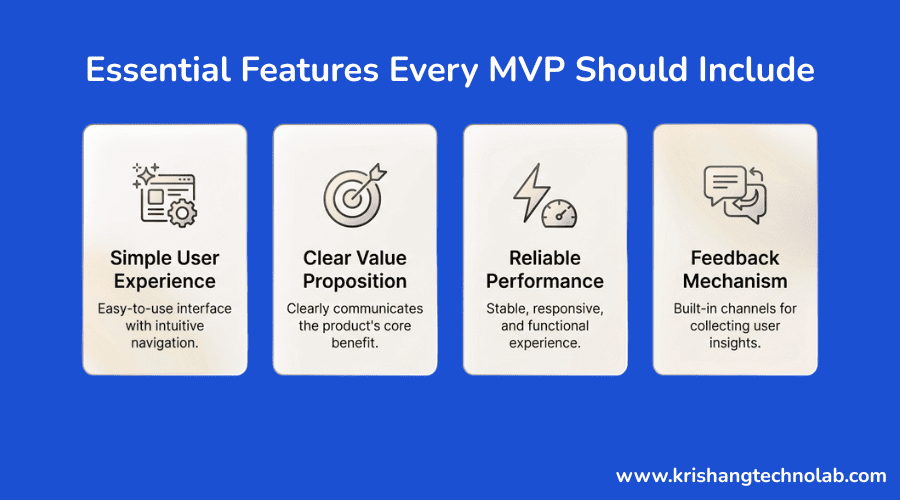
Every product is different, but successful MVPs tend to have things in common.
Simple User Experience
The product should be received immediately by the users. No complicated interfaces and unnecessary complexity.
Clear Value Proposition
Your MVP needs to clearly communicate what problem it solves. Users should be able to see benefits quickly.
Reliable Performance
An MVP has to work, even a minimal one. Early adopters may be turned off by the constant crashes and bugs.
Feedback Mechanism
Make it easy for users to share opinions and suggestions. You should consider their feedback one of your most important assets.
Common MVP Development Mistakes to Avoid
Many startups fail because they don’t understand what an MVP is for.
Building Too Many Features
This is the most frequent mistake.
Adding useless features increases:
- Development time
- Costs
- Complexity
Focus only on the main problem.
Ignoring User Feedback
Some founders fall in love with their initial vision. Customer feedback should drive product decisions.The users often know their needs better than the founders themselves.
Targeting Everyone
Serving all audiences often means serving none well. Begin with a niche market. Later expansion.
Skipping Market Validation
It’s a waste of resources to build before validating demand. Always test the interest before investing a lot.
Delaying Launch
Perfection is the enemy of progress. If the MVP solves the right problem, put it on the market and improve it with feedback.
MVP Development Trends in 2026
The startup landscape continues to evolve.
So here are some MVP development trends for 2026.
AI-Powered MVPs
Artificial intelligence is now available for you.
Startups are adding AI features to MVPs for:
- Personalization Automation
- Support Customer
- Forecasting insights
These tools support early product value enhancement.
No-Code and Low-Code Platforms
No-code tools allow founders to get products out faster. They save money as well.
These platforms reduce technical barriers. They also speed up the verification.
Data-Driven Product Decisions
Analytics are key for modern MVPs.
Then startups:
- User engagement
- Retention numbers
- Features Adoption
- Conversion rates
Data drives product improvements and the next features.
Micro-SaaS MVPs
Small software products are exploding. They are built to reach niche audiences. These products require less investment. They can also profit sooner.
Customer-Centric Development
Successful startups focus on their customers. They make no assumptions. Product growth is based on user feedback. It influences most product decisions.
How Much Does MVP Development Cost in 2026?
The cost of MVP development varies based on features, complexity, and the development approach. The primary purpose of an MVP is not to build a perfect product, but to gain insights, validate assumptions, and reduce business risk.
Typical ranges are:
| MVP Development Approach | Estimated Cost Range | Best For | Key Benefits |
|---|---|---|---|
| No-Code MVP | $2,000 – $15,000 | Early validation, simple apps, founders with small budgets | Fastest and most affordable option; ideal for quick market testing |
| Low-Code MVP | $10,000 – $40,000 | Medium-complexity products requiring faster development | Balances speed, cost, and customization |
| Custom MVP Development | $25,000 – $150,000+ | Scalable products, advanced features, long-term growth | Fully customizable and aligned with long-term product goals |
Choosing the Right MVP Development Partner
If you do not have an in-house development team, then it is important to choose the right MVP development company.
Also, look for partners who provide:
- Startup experience
- Product strategy support
- Agile development methods
- UX/UI expertise
- Post-launch support
Also, request to see reviews of past MVP projects and client case studies before making your decision. So a strong software development partner can greatly increase your chance of success.
Final Thoughts
Building a startup in 2026 requires smart decisions. It also means using resources wisely. Founders also have to learn what the customer wants. Properly planned MVPs allow founders to validate ideas. It can also help you reduce risks. It also gathers feedback to improve products based on real-world usage. The most successful startups don’t start with perfect products. They start with concrete solutions to real problems.
This MVP development guide helps startups set clear goals and prioritize the features that matter most to success. And if you live by continuous improvement, you end up with products your users prefer. It also provides a solid foundation for sustainable growth.
If you are launching a new startup, start small and learn fast. Then let your users lead you in the next phase of development. This is the end goal of MVP development. Hence, it is one of the smartest ways to make a business successful in 2026.
Found this post helpful? Don't forget to share it with your network!