Quick Overview: Explore Shopify headless commerce and understand what is Shopify headless commerce, its benefits, and impact on e-commerce. Find out about custom stores, faster performance, and scalable solutions that help brands give customers a personalized, adaptable, and future-proof online shopping experience.
Businesses are building online stores in new ways thanks to Shopify headless commerce. Headless commerce separates the frontend from the backend, which is different from how Shopify usually works. Brands have complete control over the design, functionality, and user experience of their storefront because of this separation.
If you’ve ever wondered what is Shopify headless commerce, it is a modern approach. The backend of your Shopify store runs your online store. This process includes stock, orders, and products. In the meantime, you can change everything about your frontend. You can create websites that load quickly and allow users to interact with them as a result. Shopify’s default templates do not limit you.
Many brands want to know what are the benefits of Shopify headless commerce. Faster load times, better SEO performance, personalized shopping experiences, and easier management across all channels are some of the benefits. Also, it’s great for businesses that want to grow quickly. It also works well for people who want front-end designs that are different from others.
People who are ready to take the next step must learn how to build a Shopify headless store. If you’re starting an online store, it’s easier than ever to make a custom, high-performing shop with tools like the Shopify Hydrogen framework and Shopify Oxygen hosting. Headless commerce also lets you try out new designs, flexible interfaces, and up-to-date e-commerce experiences.
What is Shopify Headless Commerce?
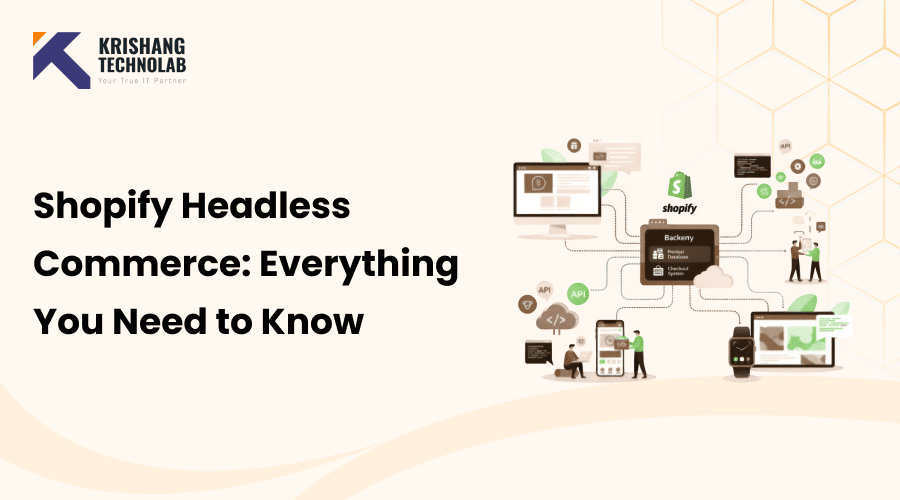
With Shopify headless commerce, the frontend and backend of your Shopify store are separated. The backend of Shopify closely links with the frontend of a standard Shopify store, which your customers view. The backend still takes care of payments, orders, items, and inventory with headless commerce. The frontend, on the other hand, may be entirely customized with new technologies.
With this Shopify headless architecture, marketers may create custom Shopify storefronts with flexible design that go beyond conventional Shopify templates. Developers can use APIs like the Shopify Storefront API to connect any frontend framework, such as React, Vue, or the Shopify Hydrogen framework, to the backend. This opens the door to React-based ecommerce frontend development for highly interactive and responsive shopping experiences. You may host the frontend anywhere, but Shopify Oxygen hosting is best for Hydrogen because it is quick and can grow with your needs.
A lot of businesses use Shopify headless commerce because it lets them:
- Design fully custom storefronts without restrictions from Shopify’s default templates.
- Enable headless CMS integration for ecommerce using Shopify or third-party content systems.
- Use API-driven storefronts for dynamic, real-time e-commerce functionality.
- Deliver faster and more responsive experiences across web and mobile.
- Scale enterprise operations with Shopify Plus headless setups.
Headless ecommerce Shopify means that your store is “decoupled.” The backend takes care of business operations, while the frontend provides a fast, flexible, and very engaging shopping experience. This method makes it possible for Shopify custom storefronts and advanced headless Shopify development that traditional Shopify setups can’t do.
Why Traditional Shopify Setups Reach Their Limits
Shopify is a great platform for online stores. But traditional setups can be challenging for brands that are growing. Standard Shopify tightly connects the front end and back end, unlike Shopify headless commerce. This setup makes it harder to be flexible, perform well, and grow. Many businesses also find themselves comparing Shopify with WooCommerce for e-commerce; to see which platform works best for them as they grow.
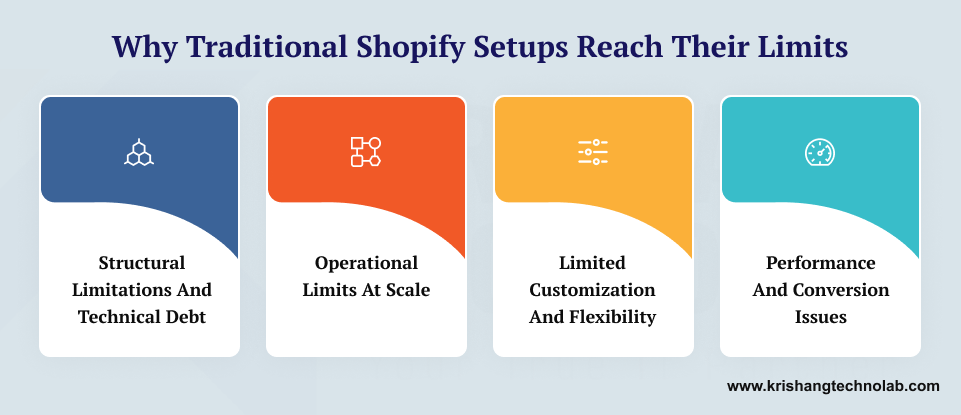
1. Structural Limitations and Technical Debt
Themes can often limit traditional Shopify stores. These themes make it difficult to make designs that are completely unique. Most of the time, you need to use workarounds or third-party apps to add complex features. These solutions can add to your technical debt. Also, changes to the backend may have an effect on the frontend. This makes things take longer to develop. It also makes it harder to set up integrations like a headless CMS Shopify. Companies that want more control over their stores and are moving from Magento to Shopify often worry about this.
2. Operational Limits at Scale
Many larger-scale retailers encounter issues processing large orders, selling large product catalogs, and running multiple stores through standard Shopify. There are also limits to how large businesses can use advanced marketing and segmentation workflows within standard Shopify.
However, Shopify Plus headless commerce does offer a more enterprise-level of flexibility for retailers to scale their business quickly and efficiently.
3. Limited Customization and Flexibility
Themes and templates limit retailers from developing a unique brand aesthetic. Any type of customization to checkout flows or product pages will require a retailer to either code it or install an application. This results in a retailer who wants a Shopify custom storefront or custom integration with headless commerce having to work through numerous hurdles. Meanwhile, headless solutions supply retailers with advanced levels of customization and flexibility and allow them to deliver a unique customer experience to their customers.
4. Performance and Conversion Issues
There are often limitations in page load speeds and frontend optimization. This can hurt SEO and reduce conversions. Complex layouts may slow mobile responsiveness. Slow checkout processes can also reduce sales. For these reasons, many brands choose headless Shopify development. This approach delivers faster, scalable, and highly customizable e-commerce experiences, especially for those switching from PrestaShop to Shopify.
Key Benefits of Shopify Headless Commerce
Businesses can grow with Shopify headless commerce. It is flexible, swift, and able to grow. It splits the front end from the back end. This technique lets businesses quickly make online stores that are unique to each customer. You can also fully customize stores. Also, companies can change and adapt quickly. It also helps with future growth and improves Shopify Plus benefits for enterprise-level operations.
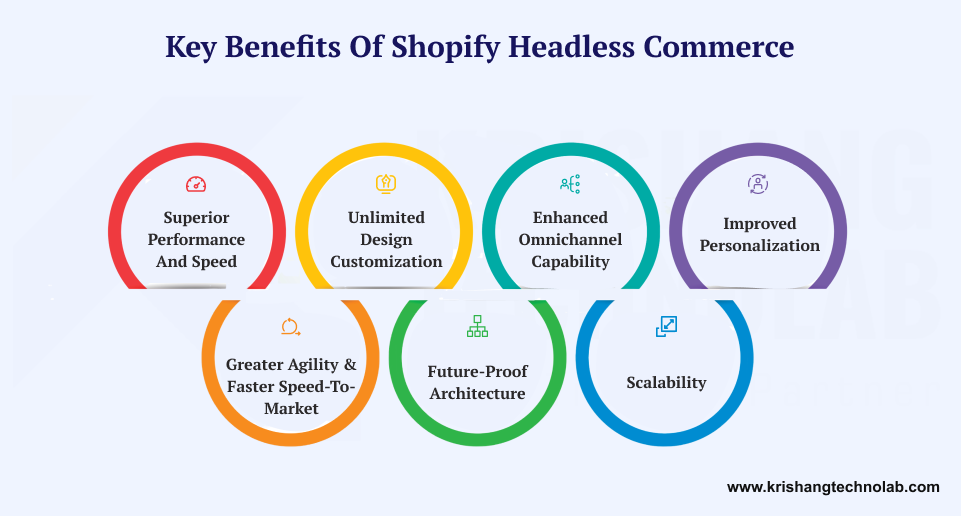
Superior Performance and Speed
One of the biggest advantages of Shopify headless commerce is superior performance and speed. You can easily find your way about. It’s easy to shop. It feels smooth. Sites that load quickly get better ranks from search engines, which helps with Shopify speed optimization and on-page SEO. This also helps more people buy. Customers also stay interested for longer.
Unlimited Design Customization
With a headless setup, brands have unlimited design customization. Shopify developers can create Shopify custom storefronts. Standard themes don’t limit them. This gives you complete control over the layouts, visuals, and features. Stores can look different and have their own brand. Customization also helps build a brand’s identity.
Enhanced Omnichannel Capability
Headless commerce has the capability to provide a consistent shopping experience across multiple channels. The same Shopify back end supports websites, mobile applications, social media channels and smart devices, ensuring that your business operates seamlessly and your customer experiences the same shopping experience at every channel. Omnichannel capability enhances customer loyalty.
Improved Personalization
Headless commerce simplifies the process of personalizing the shopping experience by providing you with the ability to provide product recommendations, content and promotions tailored to each customer’s unique preferences, including AI product recommendations. This will make shopping more meaningful for customers, which will lead to more sales and better engagement. Additionally, providing tailored experiences will increase the likelihood of repeat purchases.
Greater Agility and Faster Speed-to-Market
Headless commerce enables swift updates. You can also add new features, campaigns, or apps without changing the backend. So, companies can stay competitive and come up with new ideas faster. It’s easier to launch. This process also cuts down on delays in development.
Future-Proof Architecture
Headless commerce has a modern and flexible tech stack. Building a business on headless commerce means that you can implement new front-end tools and services without having to change your back end. This means that as your business grows, you will continue to be able to deliver high-quality customer experiences, as well as provide your company with the ability to quickly adopt new technologies.
Scalability
The additional benefit of headless commerce is the ability to scale. Shopify Plus headless commerce supports a large number of products, heavy traffic to your website, and complex workflows. Companies in headless commerce can continue to grow while maintaining high performance and reliability on a large scale. In addition, the headless platform was designed for long-term use (future-proofing your business).
Challenges and Considerations in Shopify Headless Commerce
Shopify headless commerce is fast, flexible, and customizable. But it also has some problems. They should know them.
Development Complexity
It can be difficult to develop. For instance, building a headless Shopify store requires skilled developers. You may need to hire Shopify developers who know how to separate the front end from the back end, as well as APIs and the Shopify Hydrogen framework. Regular Shopify themes can accomplish most tasks. But a headless setup needs more planning, coding, and maintenance.
Higher Implementation and Maintenance Costs
Headless stores can be pricier to set up and maintain than traditional stores. Building your own custom front end and connecting it to the back end can lead to higher web hosting expenses, which may require Shopify Plus if you choose to run a headless setup. Companies should carefully evaluate Shopify development cost, as headless adds another layer of complexity regarding updates, security, and troubleshooting.
Integration Challenges
It is important to integrate. The Shopify backend, third-party apps, and the frontend all need to be able to use APIs well. If not, a bad setup can slow things down or make mistakes. As a result, this can negatively impact the user experience.
Assessing ROI
Companies should see if the benefits are worth the money they spend. For instance, small stores or simple businesses might not need headless solutions. Shopify Plus headless commerce is best for brands that want Shopify custom storefronts, advanced personalization, or the ability to grow their business to the level of an enterprise.
How to Build Shopify Headless Commerce
Building a Shopify headless commerce store requires planning and technical skills. You also need a clear plan. By separating the frontend from the backend, brands can make storefronts that load quickly and respond swiftly. You still have full control over the design, features, and performance of your store.
1. Plan Your Architecture & Setup Shopify Backend
Planning the layout of your store is the first step. Next, set up the backend of Shopify. Set up things like products, collections, inventory, and payment gateways. Also, set up APIs so that they can be used on the front end. Planning ahead makes the work flow smoothly. It also supports headless Shopify development.
2. Choose a Frontend Technology Stack
Choose the frontend technology stack next. You can use the Shopify Hydrogen framework, frontend frameworks like React, or any number of other modern frameworks. You can use these frameworks to make Shopify stores that are exactly how you want them. The right stack also makes your store quick and easy to change. It also makes sure that your store works well with headless commerce APIs.
3. Build and Connect the Frontend
Once you pick the stack, the developers make the front end. For example, your team might focus on React app development for dynamic, interactive components. Thereafter, use the Shopify Storefront API to link it to Shopify. This step connects dynamic content, headless CMS Shopify, and third-party services. This makes shopping easy and fun. The backend, on the other hand, stays running smoothly.
4. Testing, Launch, and Optimization
Make sure to test your store thoroughly before it goes live. Check to see if it works, how fast it is, and how safe it is. Hosting on Shopify Oxygen makes things more reliable. Finally, after launch, monitor and update the store regularly. This keeps the store running smoothly, makes sure it can grow, and gives you a fully functional Shopify Plus headless commerce store.
Is Shopify Headless Commerce Right for Your Brand?
Your goals will help you decide if Shopify headless commerce is right for you. Also, what you have matters. Plans for growth are important. Headless commerce is adaptable. But not every business needs it. So, think about the following:
- Custom Storefront Needs: Headless commerce lets you completely brand your Shopify storefront. You can make one-of-a-kind frontend designs, for instance. These go well with your brand. This is an important consideration when comparing Shopify vs Shopify Plus.
- Advanced Personalization: You can make shopping experiences just for you. Use Shopify and APIs with a headless CMS. This means that users only see content that is relevant to them.
- Performance and Speed: Another advantage of headless commerce is that your headless store will load very quickly and improve your search engine optimization (SEO) rankings, resulting in a smooth customer experience.
- Technical Expertise Required: Since you will need Shopify developers to set up your headless commerce Shopify website, you will incur a higher initial cost. This is especially relevant for Shopify for startups, who may need guidance on setup and cost management.
- Enterprise Scalability: Shopify Plus headless commerce can handle big catalogs. It can handle a lot of traffic. They also takes care of complicated workflows. It also helps things grow.
- Omnichannel Capabilities: Headless shopping can work on the web, mobile devices, and more. Users get the same experience everywhere because of this. Conducting a Shopify store audit can help identify gaps and ensure your systems are optimized for headless commerce.
- Long-Term Growth: Headless architecture helps new ideas and growth. Overall, it makes your system more flexible and up-to-date.
The last choice depends on the price and the goals. The complexity of the system is also important. In short, Shopify headless commerce is best for brands that need speed, scale, and flexibility.
Why Choose Krishang Technolab for Shopify Headless Commerce Development?
A successful implementation of Shopify headless commerce depends on picking the right partner. First, we offer scalable and high-quality Shopify development services at Krishang Technolab. We design these services to meet the specific needs of your business. Our team also knows how to build headless Shopify stores. For instance, we help businesses make storefronts that are quick, adaptable, and fully tailored to their needs.
- Custom Solutions: Use modern frameworks to make strong custom storefronts for Shopify. This also makes sure that your store is a perfect fit for your brand.
- API Expertise: Easily connect the Shopify Storefront API and headless commerce APIs. This also keeps your store connected and working.
- Scalable Builds: Make your store ready for Shopify Plus headless commerce to grow. Also, as your business grows, your store can handle more traffic.
- Performance Focus: Speed up load times and make the customer experience better. Also, stores that are faster get more sales and customers.
Last but not least, if you want to hire Shopify expert developers, Krishang Technolab has the skills to build, grow, and improve your headless store so that it will be successful for a long time. Also, we focus on delivering measurable results that help your business grow.
Conclusion
Shopify headless commerce gives brands more flexibility, performance, and scalability than anything else. You can create fully customized Shopify storefronts by separating the front end from the back end. This setup makes things go faster and more smoothly. Hire Shopify developers who are experts in headless architecture if you want to succeed. Also, hire a best Shopify web design company to help you. They will make your store look excellent, work well, and be ready to grow. Headless commerce also helps your business stay ahead of the competition. It lets you grow quickly and give each customer a unique experience. Finally, these benefits are not available with traditional Shopify setups.
FAQs: Shopify Headless Commerce
What is Shopify headless commerce, and how does it work?
Shopify headless commerce splits your store into two parts: the front end and the back end. The backend takes care of orders, products, and inventory. The frontend, on the other hand, uses APIs like the Shopify Storefront API to give customers faster, more flexible, and personalized shopping experiences.
What are the benefits of Shopify headless commerce?
Some of the benefits are better performance and speed, unlimited design customization, better omnichannel capability, better personalization, faster speed-to-market, scalability, and an architecture that will last for a long time. Also, brands can change quickly. Headless commerce also helps with long-term growth plans.
How to build a Shopify headless store step by step?
Begin by planning your architecture to build a headless store on Shopify. Next, please prepare the Shopify backend. Pick a frontend technology, such as the Shopify Hydrogen framework. Next, use APIs to connect the front end. Try it out and open your store after that. Lastly, make it work better.
Shopify headless vs traditional Shopify: Which is better?
For small stores with simple needs, traditional Shopify is easier to use. Shopify headless commerce is better for brands that want custom storefronts, more advanced personalization, faster performance, and the ability to grow to the level of an enterprise. It also works with experiences across all channels.
Do you need coding for Shopify headless commerce?
Yes, you need to know how to code or get help from a developer to set up a headless system. You need to know how to work with APIs, frontend frameworks, and headless CMS Shopify integration. To connect the backend and make a fully customized storefront, you need to know this.
Is Shopify headless commerce worth it for my business?
Headless commerce is ideal for big brands that want Shopify stores that can grow with them, are quick, and can be fully customized. It also gives you long-term flexibility, the ability to use multiple channels, and a better user experience. It also has benefits that traditional Shopify setups can’t match.
Found this post helpful? Don't forget to share it with your network!