Quick Overview: Agencies often lose margin quietly through idle staff time, hiring overhead, and fixed salaries. White label services convert those fixed costs into variable ones, letting agencies scale capacity, take on more clients, and boost white label agency profit margins without adding headcount. This guide breaks down the real math, risks, and rollout strategy.
Most agencies don’t lose money on bad clients. They lose it quietly on the designer sitting idle between projects, the developer you hired for one big contract that never repeated, and the account manager’s time spent managing a hire instead of managing revenue. None of that shows up as a single bad decision. It shows up as a slowly shrinking margin that’s difficult to trace back to a cause.
White label services are one of the most direct ways to fix that. Not because outsourcing is inherently cheaper, but because it changes the shape of your costs from fixed to variable. Whether you call it white labeling, private labeling, or simply working with a white label agency, the mechanism is the same: you stop paying for capacity you might use and start paying only for work you’ve already sold. Here’s how that plays out in practice for white label agency profit margins, where the real margin gains come from, and what to watch out for before you commit to a white label partnership.
The Hidden Cost of Doing It In-House
When agencies calculate the cost of an in-house hire, they usually stop at salary. But salary is just the starting line. A full-time designer or developer also costs you in benefits, software licenses, training time, management overhead, and the part everyone forgets the gaps between projects when that person isn’t billable at all. This is exactly the gap software development outsourcing is built to close: instead of carrying that overhead yourself, you tap into an outsourced team that’s already staffed, trained, and ready to go.
A rough comparison makes the gap obvious:
| Cost Factor | In-House Hire | White Label Partner |
| Base pay | Fixed monthly salary | Paid per project |
| Benefits & taxes | Yes, ongoing | None |
| Software & tools | Your cost | Their cost |
| Idle/bench time | You still pay | You pay nothing |
| Management overhead | Yes | Minimal |
| Scaling down | Layoffs, severance | Just stop ordering work |
The in-house column has costs that exist whether or not there’s work to do. The white label column only activates when there’s a paying client behind it. That’s the entire mechanical reason white label agency profit margins improve; it’s not that outsourced work is “cheaper” line for line, it’s that you eliminate the cost of unsold capacity. This is why so many marketing agencies, digital agencies, and creative studios are shifting toward white label fulfillment instead of building out every department in-house. If you’re still weighing the two models against each other, this breakdown of white label agency vs. outsourcing explains exactly where they diverge.
The Markup Model — How the Profit Actually Works
Once the cost side is variable, the profit mechanism behind white label agency profits is simple: you pay a white label provider a wholesale rate, then mark that up when you bill the client. This reseller-style model is the backbone of nearly every white label pricing strategy, regardless of which service you’re outsourcing.
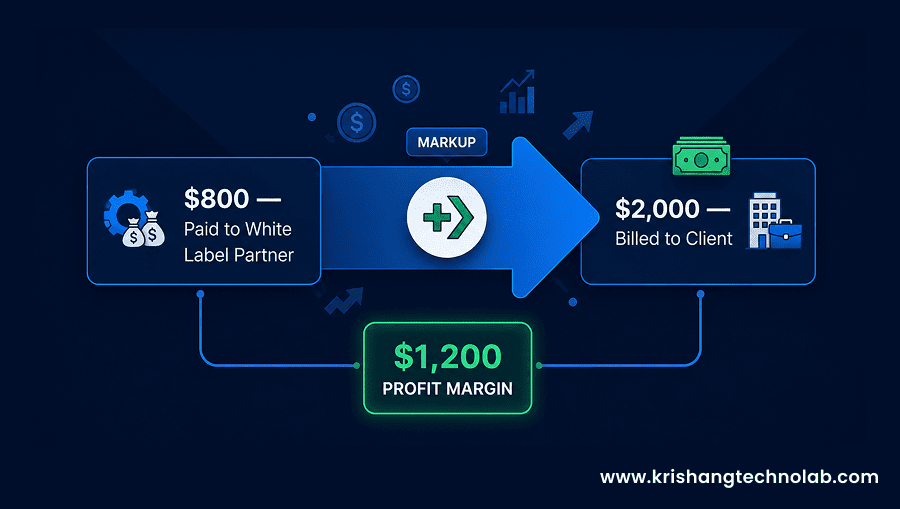
Say a white label partner builds a website for $800 through a white label web design partnership. You quote the client $2,000 for the same deliverable, positioned with your branding, project management, and client relationship layered on top. Your margin on that single project is $1,200 without touching payroll, without hiring, and without carrying that designer through a slow month.
The markup isn’t arbitrary. It has to cover:
- Your account management and client communication time
- Sales and acquisition cost for that client
- A buffer for revisions or scope adjustments
- Actual profit
Agencies often make the mistake of setting the markup too low because they fear losing a deal, which leads to confusion about why their white label strategy isn’t effective. The markup needs to reflect the full value you’re adding, not just the vendor’s invoice.
The global IT services outsourcing market size is estimated to reach USD 1,219.31 billion by 2030, expanding at a CAGR of 8.6% from 2025 to 2030, according to a new report by Grand View Research.
Margins by Service Type
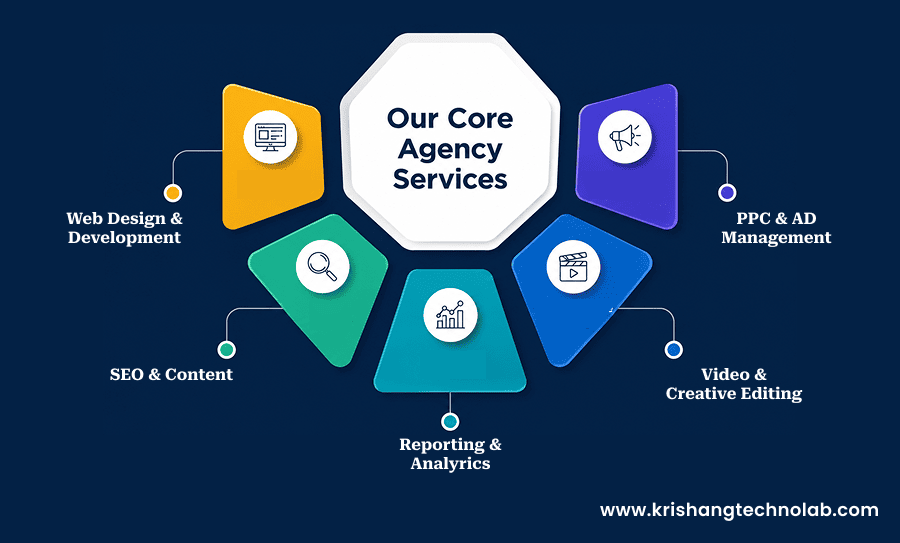
Not every service line responds the same to white label agency profit margins. What you are outsourcing can make a huge difference in both the potential for markup and the risk:
- White label web design & development: Typically the widest markup range, since projects are often quoted as one-off fees and clients rarely see the underlying vendor cost.
- White label SEO & content writing: The recurring revenue potential is strong here, but quality consistency matters more because it’s an ongoing relationship, not a one-off deliverable.
- White label PPC & ad management: Often billed as a percentage of ad spend, so margin is more predictable but usually thinner per client.
- White label video & creative editing: High markup potential on a per-project basis, especially for agencies without in-house video capacity today.
- White label reporting & analytics: Lower direct margin, but valuable as a retention tool that keeps clients from questioning the rest of your billing.
Mixing service lines is often smarter than betting on one. A single white-labeled channel is exposed to that channel’s pricing pressure; a bundle of two or three, say, white label SEO paired with white label PPC smooths that out and allows you more room to package pricing in a way clients don’t scrutinize line-by-line. This is also why so many agencies now bundle broader digital marketing services and market themselves as full-service white label marketing agencies rather than single-service shops.
Revenue-Side Gains — Not Just Cost-Cutting
It’s easy to frame white label outsourcing purely as a cost-saving move, but the revenue side matters just as much:
- Capacity without hiring lag. You can say yes to a new client or a new service line immediately, instead of waiting weeks to recruit and onboard. This guide on hiring dedicated developers for startups breaks down just how long that in-house hiring lag typically runs.
- Cross-selling without new departments. If a client asks for video editing and you don’t currently offer it, white labeling lets you say yes today instead of turning down the work.
- Faster turnaround, better retention. Established white label partners often have tighter, more predictable processes than a single overloaded in-house hire, which means fewer missed deadlines and fewer client complaints.
Taken together, this isn’t just about protecting white label agency profit margins on existing work; it’s about taking on more revenue than your current team could otherwise support.
The Risks Nobody Talks About
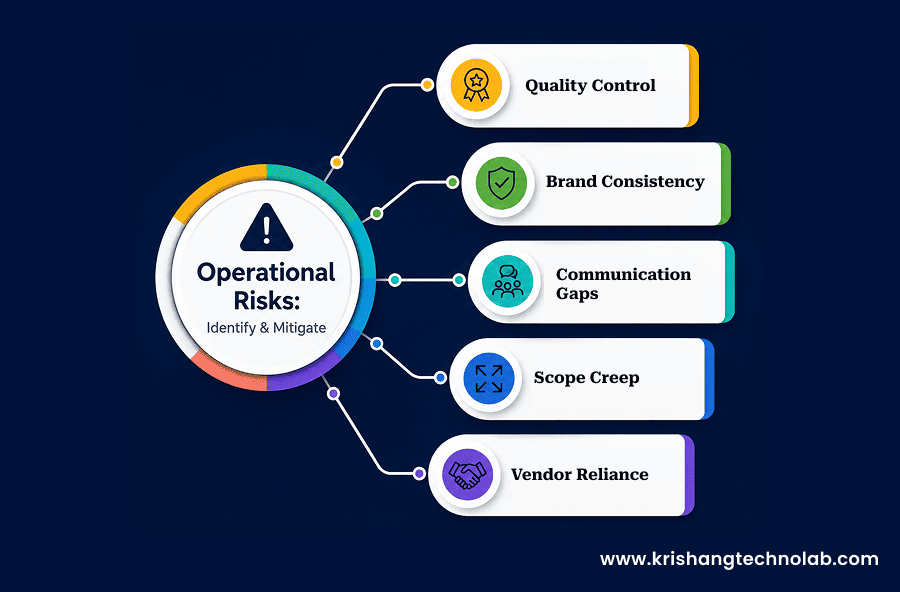
Most articles on this topic only discuss the benefits. The risks of white label outsourcing are just as real, and ignoring them is how agencies end up disappointed after making the switch.
- Quality control gaps. You’re vouching for work you didn’t produce. If the partner’s quality dips, your client relationship absorbs the damage, not theirs.
- Brand consistency issues. Design and writing style need to match your agency’s standards, not just be “good enough.”
- Communication and time zone friction. Delays in getting revisions back from a partner can quietly erode the turnaround advantage you were counting on.
- Margin erosion from scope creep. If a client asks for more rounds of revisions and your partner charges you per round, that eats into the white label agency profit margins that you based the pricing on. This problem is common in white-labeledPPC management services, where tweaks to campaigns add up billable hours quietly.
- Over-reliance on a single partner. If one vendor becomes central to a service line and their quality or pricing changes, you have limited leverage.
None of these are reasons to avoid white labeling; they’re reasons to build the relationship carefully rather than treating it as a plug-and-play fix.
How to Choose a White Label Partner
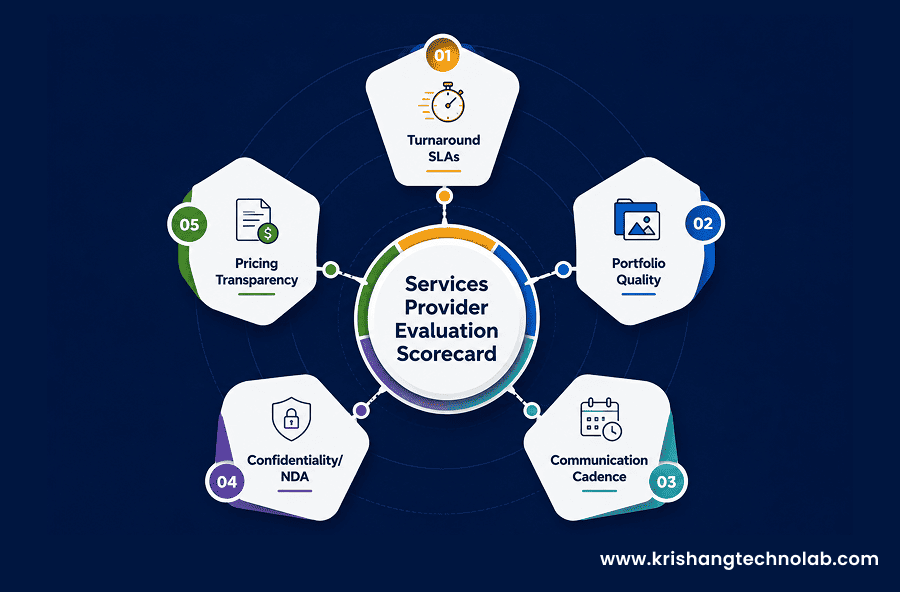
Check a white label service provider against a brief set of requirements before committing to them:
- Turnaround SLAs: Get precise, documented deadlines rather than ambiguous assurances.
- Portfolio and sample quality: Request work in your real area of expertise rather than generic samples.
- Communication cadence: Know who you’ll be talking to, how often, and how decisions are made.
- Confidentiality and white-label reporting: Contracts should specifically protect your client relationships and branding.
- Pricing transparency: Know what’s flat-fee, what’s hourly, and what incurs additional costs.
A quick trial project before a full commitment is almost always worth the delay; it surfaces quality and communication issues far more reliably than a sales call does.
Read About: Common Misconceptions About White Label Services
Implementation Roadmap
Rolling out white label services doesn’t need to be an all-at-once decision. A staged approach reduces risk and gives you real numbers to work from:
- Pick one service line to test: Usually whichever one is currently costing you the most in idle capacity or turnover.
- Run it with 2–3 clients: Small enough to monitor closely, large enough to see real patterns.
- Track actual cost vs. markup: Compare it directly against what that work was costing you in-house.
- Prove scale: Expand to other service lines only after the first one shows clear margin lift.
Common Mistakes to Avoid
- If you underprice your markups because you are afraid of losing the client, you cap your upside before you even begin.
- Skipping the vetting process to move fast, then scaling volume before quality is confirmed.
- Overpromising turnaround to clients based on a partner’s best-case timeline instead of their realistic average.
The Bottom Line
Improving white label agency profit margins isn’t usually about cutting corners or squeezing clients for more money; it’s about restructuring where your costs sit. White label services, white label solutions, or whatever you choose to call the outsourced model that fits your agency moves costs from fixed to variable, which means you stop paying for capacity you’re not using and start capturing margin on every project you sell.
Done carefully with the right white label partner, the right markup, and a staged rollout, white labeling is one of the fastest levers available for improving profitability without adding headcount or risk. For more breakdowns like this one, check out the Krishang Technolab for ongoing coverage of white label strategy and agency growth.
Found this post helpful? Don't forget to share it with your network!