
Quick Overview: Discover the 25 best React Native app examples from leading global brands and see how React Native app development powers popular mobile apps across e-commerce, fintech, social media, entertainment, and more. These real-world examples highlight the benefits, use cases, and growing adoption of React Native for cross-platform mobile app development.
React Native App Examples shows how leading companies are using cross platform technology to create cutting edge mobile experiences. React Native allows development teams to create iOS and Android apps from a single codebase. This means faster development, re-usable components and consistent cross platform experiences
React Native App Development is used today by global brands in e-commerce, finance, communication, education, entertainment, and enterprise industries. These examples of React Native apps show how React Native solutions can be used for a variety of product needs in different businesses. Some companies use React Native a lot, some use it together with native technologies for some features.
This means increasing popularity of React Native Development and requirement for scalable and efficient mobile products. Businesses require shorter development cycles, robust performance, flexible architecture and a reliable user experience. This is why React Native App Development Experts help businesses choose the best platforms and build apps that work for them.
In this guide we’ll take a look at 25 top React Native App Examples and their approaches behind. You will learn their use cases, development advantages, business lessons, costs, current trends and future opportunities.
What Are React Native App Examples?
React Native App Examples are mobile apps that are developed partially or completely using React Native. Support for reusable components and native iOS and Android features. Also, many companies combine React Native with native code for certain features, making React Native Solutions flexible for customer apps, marketplaces, financial platforms and internal tools. That allows companies to balance the needs of the specific platform with the needs of development efficiency. Therefore, React Native can be used for start-ups and big scale digital products.
Why React Native for Apps?
Companies are increasingly choosing React Native to build mobile applications that deliver a consistent experience across iOS and Android without the need to maintain two separate codebases. Its shared architecture reduces repetitive development work while still offering the flexibility to integrate native features whenever required.
With reusable components and familiar React patterns, React Native creates an efficient development environment that supports faster product delivery and consistent code quality. This combination of efficiency, flexibility, and scalability makes why React Native for Apps? a valuable consideration for businesses developing modern mobile applications.
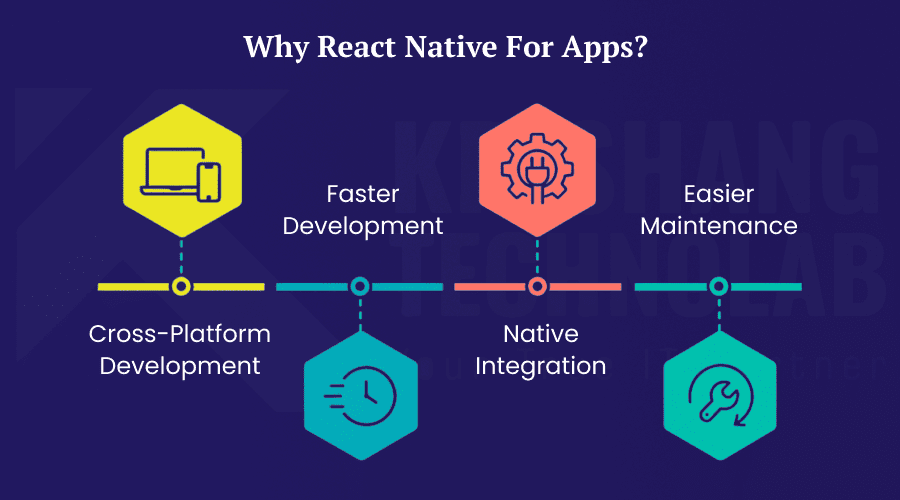
Cross-Platform Development
React Native is a thing that gives you a common ground to build apps for iOS and Android. That means businesses can more effectively coordinate development rather than having to run entirely separate application teams.
Faster Development
Reusable components help teams to develop common features faster. This way companies can perform updates and enhancements without the need to repeat each development task. This also helps to provide consistent experience across platforms.
Native Integration
“React Native is more adaptable, and developers can use features that are built into iOS and Android.” That lets teams use native modules when apps need features that are only available on a certain device.
Easier Maintenance
If the apps are doing the same things on different platforms then maintaining a common code base is easier. Teams still need to do proper testing and platform specific optimisation to ensure consistent performance and reliability.
Why Build a React Native App?
React Native is the choice of many companies who want to efficiently build and ship modern mobile experiences. It helps startups launching new products and established companies improving big ecosystems of application. And, with reusable components, you get consistent interfaces, and can use native functionality for platform-specific requirements. Why You Should Develop Applications Using React Native? depends on the product technical requirements, development goals and the future roadmap.
25 Best React Native App Examples from Leading Global Brands
These examples of React Native apps show how different companies use the framework in a range of fields. Some brands are using React Native extensively whereas some are using it for specific applications, features or development areas.
1. Facebook
Facebook was one of the first major users of React Native, as Meta developed the framework. Its engineering teams have used React Native in sections of the company’s mobile ecosystem. So, Facebook is one of the most famous React Native App Examples of large-scale development.
The key thing here is that cross-platform technology can be used in large digital ecosystems. But large products still need careful architecture, performance optimisation, and native integration.
2. Instagram
At Instagram, we gradually adopted React Native inside our existing mobile app. So the team can use react native without having to build the app from scratch.
This example shows how a company can progressively approach cross-platform development. Teams will be able to use React Native where it makes sense from a development perspective, rather than having to throw out existing technologies.
3. Shopify
Shopify has implemented React Native in multiple mobile products and is now one of the framework’s most prominent enterprise users. Its mobile ecosystem features commerce experiences for merchants and shoppers, supported by Expert Shopify Development Services that can address custom functionality and evolving ecommerce requirements.
So, Shopify is one of the best React Native App Examples for e-commerce. It shows how reusable development can make complex shopping workflows possible while delivering consistent experiences across platforms. For similar projects, you can Hire Experienced Shopify Experts or Hire Dedicated Shopify Developers based on your store’s development requirements and long-term goals.
4. Discord
Discord has brought React Native into its mobile experience to deliver communication and community features. Its use supports messaging, communities, voice communication and interactive experiences.
This makes Discord a good case study for companies building communication products. It shows that React Native is a good fit for apps that need lots of interaction and real-time features.
5. Coinbase
React Native is part of Coinbase’s approach to mobile development. Reliable interfaces, safe workflows and consistent experiences on mobile platforms are a requirement for financial application.
This React Native App Example is very useful for FinTech business. This demonstrates that financial products can be backed with cross-platform development when teams focus on security, testing, and architecture.
6. Walmart
Walmart has deployed React Native in parts of its mobile shopping experience including product discovery, purchasing, orders and customer services. This example shows how large retailers can incorporate shared mobile development, while maintaining scalability for a growing customer base.
7. Bloomberg
Meanwhile, Bloomberg has rebuilt its consumer mobile app for financial data, news and personalised content on React Native. This case study shows how React Native can be used to build information-heavy apps requiring responsive UI, optimised data processing, and stable performance.
8. Tesla
Additionally, the mobile app from Tesla connects customers to their cars and associated services, and React Native is tied to parts of the mobile experience. Tesla is an interesting React Native Example App because connected products require more advanced mobile functionality and this demonstrates how apps can become an integral part of a larger technology ecosystem.
9. Microsoft
Furthermore, Microsoft uses React Native in some of its products and platforms. The broader Microsoft ecosystem also supports cross-platform development for Windows and macOS. That’s why Microsoft offers a useful example of a React Native App for the enterprise, showing how React Native can be used with other technologies in a large technology organization.
10. Uber Eats
Meanwhile, Uber Eats has used React Native for restaurant partner experience that supports operational workflows that help restaurants manage orders and services. This example shows that React Native can be used effectively to support focused business applications, not to power every part of a consumer platform.
11. Flipkart
Similarly, Flipkart is one of the popular users of React Native and its huge e-commerce ecosystem can be a good benchmark for the companies that are building shopping applications. The example demonstrates the importance of reusable components and consistent interfaces, as well as how cross-platform development can enable complex retail experiences.
12. Wix
Likewise, Wix is one of the companies that has adopted React Native as part of its mobile development strategy and has contributed to the overall React Native ecosystem. This React Native App Example demonstrates how businesses can boost development efficiency, while combining product development with strong engineering practices.
13. Skype
Skype has followed suit, part of Microsoft’s cross-platform mobile strategy, providing responsive interfaces and reliable communication experiences. It is a good example of an application that is focused on communication and shows how shared mobile development can serve popular digital services.
14. Pinterest
Additionally, Pinterest has implemented React Native to provide smooth navigation, seamless content and compelling user interactions throughout its mobile product ecosystem. This makes Pinterest an interesting case for content-driven platforms, showing how reusable mobile components can allow rich visual experiences.
15. Shop
Meanwhile, Shop is a Shopify mobile product that focuses on shopping discovery and engagement with customers. It is part of Shopify’s bigger mobile ecosystem and a signal of the company’s commitment to React Native.
The application gives another strong React Native App Example for commerce businesses. It demonstrates how cross-platform development can lead to better customer experiences.
16. PlayStation
Similarly, the PlayStation App is a showcase app for React Native, which connects users to gaming content, accounts, social features and related services. It’s an example of how React Native can power entertainment products and the expansion of larger digital ecosystems with mobile experiences.
17. NerdWallet
It’s worth noting that NerdWallet is an independent publisher and comparison service, not an investment advisor. It mixes data, personalised content and consumer-centric financial tools into a mobile experience. The React Native App Example is relevant for the financial business. It shows how cross-platform development can help to create data-rich applications with personalised experiences.
18. Foreca
Meanwhile, weather data is a source for Foreca’s digital products. Responsive interfaces are needed to provide frequently changing data. Through React Native, it demonstrates the power of cross-platform development in bringing information based mobile experiences to life.
19. Guild
Additionally, Guild is another application related to React Native development. Its inclusion shows that the framework is more than just major social, commerce and financial applications.
In short, it’s another example to add to the list. It also proves the adaptability of React Native for specialised digital products.
20. Delivery.com
Similarly, Delivery.com is focused on ordering and delivery services. The mobile experience supports clear navigation and ordering workflows, location features and customer interactions. This React Native App Example shows how cross-platform development could help transaction-centric apps while keeping mobile workflows simple for service businesses.
21. Bloomberg Business
Meanwhile, Bloomberg’s larger mobile ecosystem shows how modern mobile experiences deliver financial information to users. These applications require responsive interfaces and reliable data presentation.
Still, React Native can meet these needs, if teams do their architecture properly. Thus Bloomberg offers some useful lessons for firms building financial information products.
22. Tableau Mobile
In addition, Tableau Mobile delivers business intelligence experiences to mobile users via dashboards, analytics, reports, and business information. This React Native App Example is helpful for enterprise software companies showing how mobile apps can extend complex business platforms to people on the go.
23. Expensify
Meanwhile, Expensify is a leader in expense management and financial administration with a mobile experience for expenses, receipts, reporting and business workflows. This is a sample of how to build productivity apps with React Native, with consistent interfaces and productive development processes.
24. Khan Academy
In the education space, Khan Academy provides mobile learning experiences for students and educators, and shows how React Native can power digital products in education. This example illustrates how flexible the framework is and how educational applications can use it to add content, user accounts, interactivity and personalised educational experiences.
25. iNaturalist
Finally, iNaturalist is a community of people using their mobile devices to record and identify plants and animals. This React Native App Example demonstrates how the framework can serve specialised communities, user groups with a focus and specific needs.
What These React Native App Examples Teach Businesses
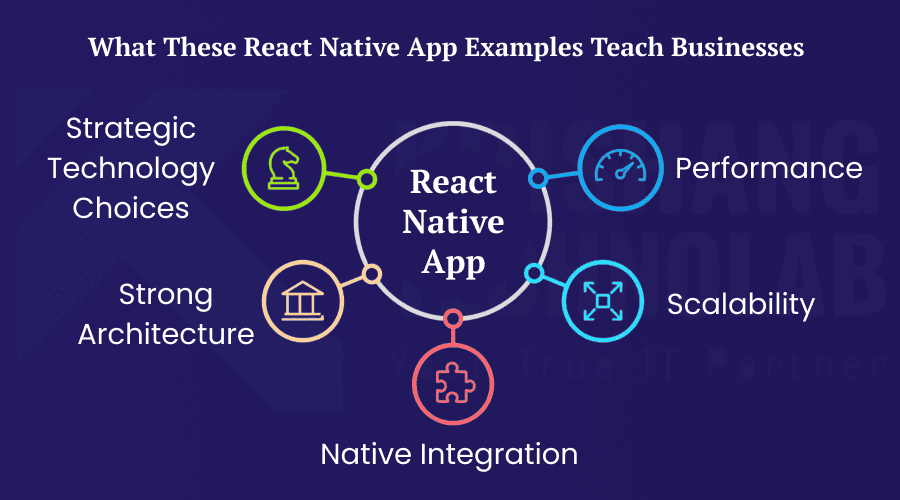
The biggest lesson from these React Native App Examples is that successful businesses use technology strategically. They’ll consider product needs, scalability and future goals to determine the right approach to development.
Moreover, big apps usually use React Native along with native technologies. This hybrid approach provides shared development benefits while maintaining platform specific capabilities. “Frameworks are a distraction. Companies should care more about architecture and performance than about choosing a framework because it’s popular.”
Which Businesses Can Benefit from React Native App Development?
React Native is helping businesses across industries. Build shopping apps for ecommerce companies, or secure account and payment experiences for financial institutions. Similarly, education platforms, learning apps, SaaS companies can make their web products mobile.
React Native can also be useful for healthcare, travel, entertainment, logistics and enterprise businesses if their needs fit the framework’s capabilities. A reliable React Native Solutions Company can evaluate these needs and suggest an architecture that supports present functionality and future growth.
React Native App Development: What Businesses Need to Plan
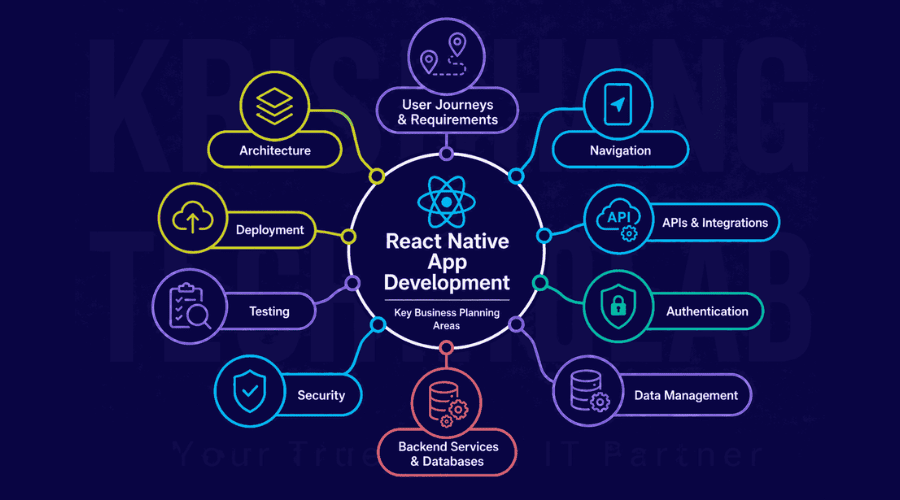
A successful React Native application is not made only by a good-looking mobile screen. Teams have to consider architecture, navigation, APIs, authentication, data management, integrations, testing, and deployment. Businesses need to determine the user journeys and technical requirements and then choose the appropriate libraries, backend services, databases, and integrations. Hiring Expert React Native Developers with experience across these areas can make it easier to manage the technical requirements throughout the development process.
Additionally, security should also be thought of from the beginning, especially in applications that handle payments or personal data. It’s just as important to test on different devices, so teams should include functional testing, performance testing, security testing, and release monitoring.
How to Choose React Native App Development Experts
Choosing the right team plays an important role in maintaining project quality and long-term performance. A reliable React Native App Development Agency should have expertise in React Native, native mobile development, architecture, and testing. Depending on the project’s complexity and technical requirements, you can Hire Top React Native Developers with the right experience to take your app from development to launch.
React Native App Cost 2026
Overall, the cost of React Native App in 2026 depends on features, complexity, UI/UX, backend development, integrations, testing, security, and developer expertise. Simple apps tend to be less expensive than marketplaces or enterprise systems, so don’t get too hung up on one price. A practical React Native Cost Guide 2026 must include hosting, maintenance, security updates, monitoring and future enhancements.
React Native App Trends 2026
React Native App Trends 2026 are all about better performance, stronger architecture and native interoperability. Meanwhile, mobile apps are also affected by AI-driven features and better development tools. Consequently, such changes make React Native Trends 2026 a must-have for companies developing the mobile products of tomorrow. That’s why companies are focusing on faster development and smarter user experiences.
Future of React Native App Development
But the future of React Native is probably one of performance and flexibility. Companies are increasingly looking to share development without losing access to critical native capabilities. The React Native ecosystem has already grown beyond traditional mobile development. The wider range of platforms it supports is proof of the technology’s ability to evolve with application needs. The React Native App Development Timeline outlines the key stages involved in taking an application from initial planning to launch.
Furthermore, new opportunities for mobile products arise from AI integration. Based on a common development platform, React Native allows companies to create bespoke and smart experiences.
And for these reasons, React Native App Development Experts can be instrumental in helping businesses assess future-proof architectures. A good development plan must be flexible enough to accommodate the technologies of tomorrow, but also to meet the needs of today.
Frequently Asked Questions
What Are the Most Popular React Native App Examples?
Some well-known React Native apps are Facebook, Instagram, Shopify, Discord, Coinbase, Walmart, Microsoft and PlayStation. While some big apps only use react native for some features and not the whole code base.
Is React Native App Development Good for Large-Scale Apps?
Using the right design, testing, monitoring and native integration, teams can build big apps with React Native. In fact, several big companies have been using React Native in big products and other parts of products.
Why Is React Native Widely Used for Mobile App Development?
React Native enables companies to create apps that are cross-platform, share components, make updates faster, and deliver the best experience to mobile users, always. This also allows teams to put native functionality in all the places they need it, within this framework.
How much should you budget for a React Native app in 2026?
In 2026, how much will it cost to create a React Native application? The cost of developing a React Native app ranges from $15,000 to $150,000+ depending upon the complexity and features of the app. Simple apps are cheap to develop, whereas business and marketplace apps isn’t free.
Is React Native App Development Still Relevant in 2026?
Yes. React native is still under development and is in use. The ecosystem is still evolving and large companies are still adopting the framework for mobile products and features.
How can I hire React Native developers?
Businesses should take into account the developer’s portfolio, experience with React Native, knowledge of native mobile, architecture skills, testing possibilities, and communication practices. The right team will also provide clear planning for development and help after the launch.
Conclusion
These 25 React Native App Examples show how adaptable the framework is for different industries. Indeed, companies worldwide are using React Native to create experiences in commerce, finance, communication, education, entertainment, productivity, and enterprise.
However, choosing the right framework is only half the battle in building successful mobile applications. What you get is architecture, performance, security, testing, user experience and developer expertise.
Therefore, businesses need to consider their needs when selecting React Native. For those reasons, the framework might work well as a base for creating mobile apps that can grow as needed.
The right React Native solutions help businesses build mobile products that fulfill today’s goals and tomorrow’s growth. What are some good things about React Native Development? The answer depends on product, budget, technical requirements and long term business strategy.
Found this post helpful? Don't forget to share it with your network!