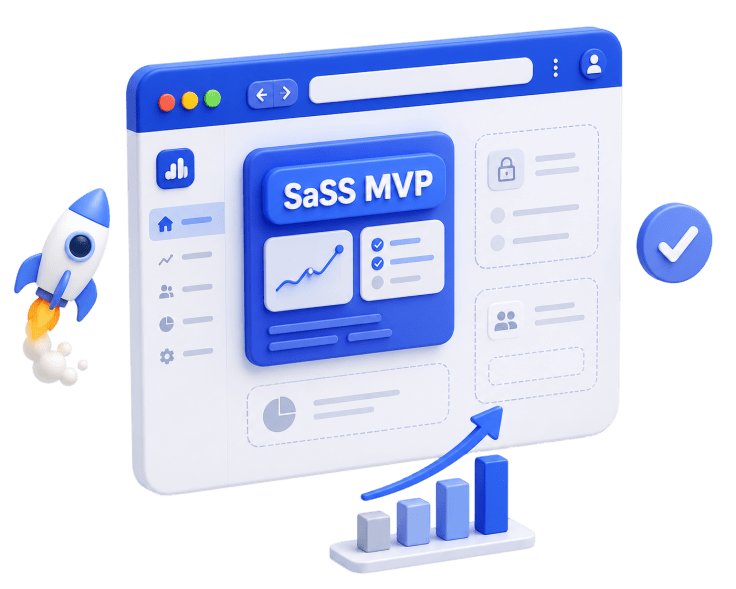










Most failed SaaS launches don’t fail because of bad code. They fail because the team built the wrong things, in the wrong order, for too long before anyone outside the company used the product. Here’s where that goes sideways, and how building SaaS MVP the right way avoids it.
| What Usually Happens | How We Approach It Instead |
|---|---|
| Founders spec out every feature before writing a line of code. | We define a single core workflow first, then build only what supports it. |
| Engineering builds for scale before there’s a single paying user. | We architect for scale (multi-tenant, cloud-native) without building scale-only features early. |
| Billing and plans get bolted on right before launch, badly. | We wire subscription billing into the SaaS MVP from sprint one. |
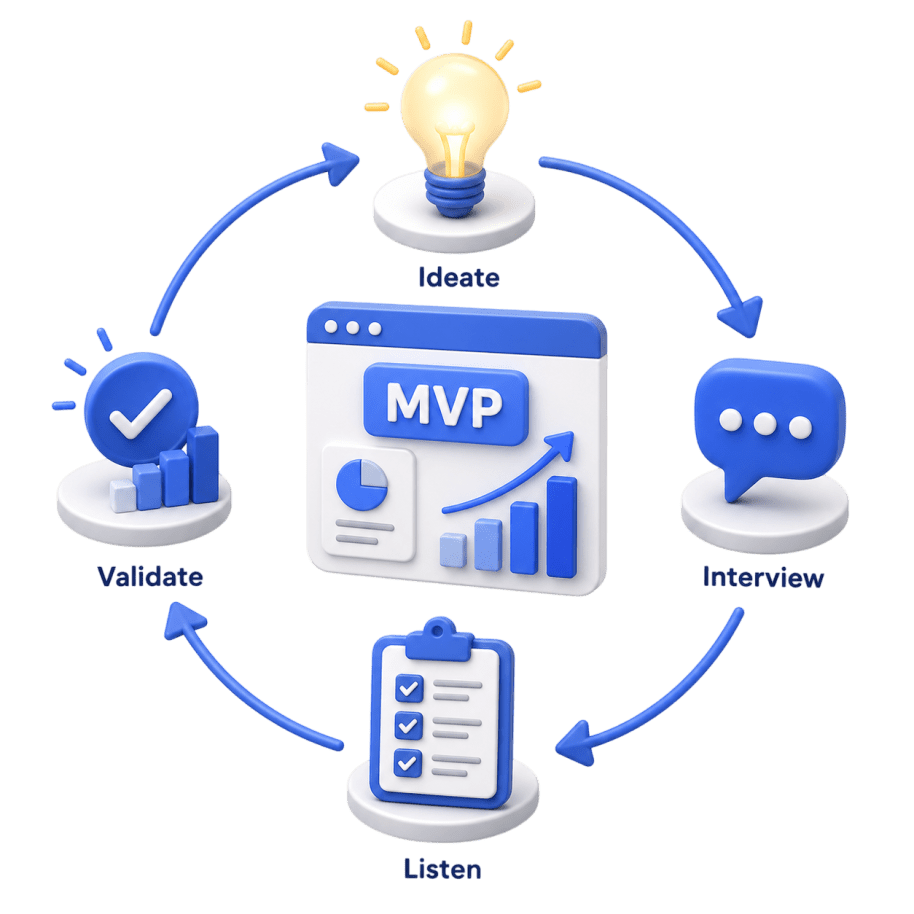
| Nobody outside the founding team sees the product for months. | We push toward a usable release in weeks so feedback starts early. |
| The team guesses at pricing instead of testing it. | We help you run real pricing experiments with your first cohort of users. |
| A pivot after six months of full development is too expensive to make. | A SaaS MVP keeps the cost of being wrong low enough to actually pivot. |
| Technical debt from a rushed MVP blocks the next funding round. | We build lean but clean, so your SaaS MVP doesn’t need a rewrite to scale. |
| Competitors with more funding are already moving toward your market. | We compress the build timeline so you launch, learn and iterate before they do. |
| Investors want to see traction, not just a roadmap slide, before they commit. | A live SaaS MVP with real usage data gives you something a pitch deck can’t. |