
Quick Overview: A Progressive Web Application (PWA) combines the features of websites and native apps to deliver fast, secure, and reliable digital experiences. This guide covers PWA features, benefits, the development process, and future trends, helping businesses understand how this technology improves performance, user engagement, and scalability.
Over the last decade, the way people interact with digital products has changed significantly. Today, users expect websites and applications to load quickly, perform smoothly, and deliver a seamless experience across every device, regardless of their internet connection. At the same time, businesses are searching for cost-effective solutions that help them reach users across multiple platforms without compromising performance. This is where a Progressive Web Application makes a real difference by providing a modern PWA solution that combines speed, reliability, and accessibility.
A PWA app combines the best features of a traditional website and a native mobile application. It provides a fast, reliable, and engaging experience without requiring businesses to create separate apps for Android and iOS. Companies can also collaborate with a Progressive Web App development company or PWA development company to build scalable solutions that improve user engagement, increase conversions, and reduce development costs.
If you are new to this technology, this beginner’s guide explains everything you need to know about a Progressive Web Application, including how it works, its key features, business benefits, Progressive Web Application development process, challenges, and future trends.
What Is a Progressive Web Application?
A Progressive Web Application (PWA) is a web application that utilises modern web features to provide an app-like experience to users in a web browser. A Progressive Web Application (PWA) differs from a traditional website because it can work offline, send push notifications, and be added to a user’s home screen without requiring an app store download. This makes it a powerful Progressive Web App solution for businesses looking to deliver reliable and engaging digital experiences with PWA development services.
A Progressive Web Application is designed to be responsive, secure, and reliable across different devices and operating systems. It is built on a common code base, ensuring a consistent user experience across desktops, tablets, and smartphones while simplifying maintenance and updates. This approach makes PWA technology a practical choice for businesses seeking scalable and efficient digital solutions.
The approach of using Progressive Web Applications is becoming increasingly popular because it combines the accessibility of websites with many powerful capabilities of native apps. This makes Progressive Web Apps a reliable choice for businesses looking to create engaging, scalable, and user-friendly digital experiences.
Why Is a Progressive Web Application Important?
Users today expect digital platforms to offer fast, smooth, and convenient experiences. A slow-loading application can affect engagement, increase bounce rates, and reduce potential conversions. Progressive Web Applications allow companies to deliver improved speed, offline capabilities, and a reliable experience across various devices. From retail and healthcare to education, finance, travel, and media, organisations are adopting this technology to strengthen customer engagement and drive digital transformation. Companies planning to build advanced digital solutions can leverage Web App Development Services to create scalable, high-performing, and user-friendly applications.
How Does a Progressive Web Application Work?
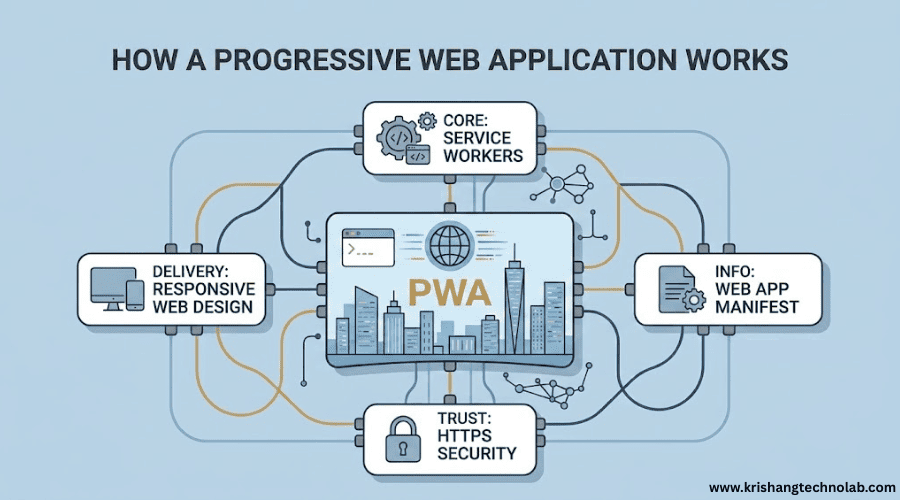
In general, a Progressive Web Application uses modern web technologies to deliver a fast, reliable, and app-like experience across devices. Service workers, web app manifests, and HTTPS enable offline access, push notifications, and home screen installation. Progressive Web Applications provide quick loading, smooth performance, and seamless experiences even with limited connectivity. This makes PWA development a valuable approach for building secure, engaging, and high-performing web applications.
Service Workers
First and foremost, service workers are background scripts that enable a Progressive Web Application to cache essential resources and manage network requests efficiently. They allow users to access content even when the internet connection is slow or unavailable by delivering cached data. Service workers also improve application speed and performance by storing frequently used files on the local system, making them a key component of a PWA architecture.
Web App Manifest
The web app manifest is a JSON file containing the application name, icons, theme colours, and display preferences. It enables a Progressive Web Application to install directly on a user’s home screen. This improves accessibility, strengthens branding, and makes a PWA website easier and faster to open.
HTTPS Security
Equally important, every Progressive Web App must run over HTTPS to ensure secure communication between users and the server. HTTPS security encrypts data while it is transferred between the browser and the application, helping prevent cyber threats and unauthorised access to sensitive information. This builds trust with users and is essential for enabling key PWA features like service workers and offline functionality, ensuring a secure Progressive Web App experience.
Responsive Web Design
Meanwhile, responsive web design plays an important role in making a Progressive Web Application adaptable across desktops, laptops, tablets, and smartphones. The application automatically adjusts its interface and features based on the device, providing users with a smooth and consistent experience. Instead of developing separate versions for different platforms, companies can simplify development and maintenance with a single solution. By combining responsive design, service workers, web app manifests, and HTTPS, Progressive Web Applications deliver secure, fast, and accessible experiences. For organisations seeking specialised solutions for Apple devices, iOS App Development Services provide the expertise required to create powerful and user-focused mobile applications.
Key Features of a Progressive Web App
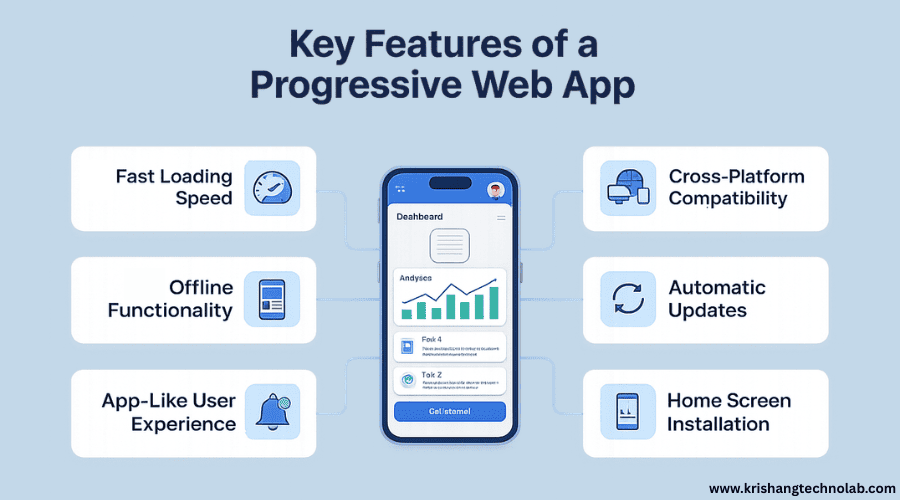
Overall, a Progressive Web App delivers enhanced usability by combining modern web technologies with user-focused features. Offline access, push notifications, responsive design, and home screen installation create a convenient and accessible experience. These capabilities improve speed, performance, and interaction across various devices and platforms. With its advanced features, a PWA application drives higher user satisfaction, stronger engagement, and improved business outcomes.
Fast Loading Speed
Speed is one of the most important factors for a good user experience. Users expect web apps to load quickly and respond instantly. Progressive Web Applications use service workers to cache critical assets and reduce unnecessary network requests, resulting in faster load times. These performance improvements help pages load smoothly and allow seamless navigation even on slow or unstable internet connections. A well-optimised PWA framework helps deliver a faster, more responsive experience that improves user engagement and overall application performance.
Offline Functionality
Likewise, reliable offline access makes a Progressive Web Application more effective, even with unstable or limited internet connectivity. Specifically, service workers cache important resources, allowing users to access essential features without network interruptions. This functionality enhances accessibility, improves reliability, and strengthens user retention through a powerful PWA solution.
App-Like User Experience
A Progressive Web Application delivers an app-like experience with seamless navigation, full-screen support, and intuitive interfaces similar to native mobile apps. It is designed to be mobile responsive with smooth interactions, allowing users to access content easily and complete tasks efficiently. Moreover, providing a consistent experience across multiple devices improves usability, enhances customer satisfaction, and encourages users to engage with the application more frequently. Companies looking to create visually appealing and high-performing digital experiences can Hire Dedicated Webflow Developers to build user-focused solutions that complement their Progressive Web App development goals.
Push Notifications
Direct user communication becomes easier with a Progressive Web Application through the use of push notifications. These notifications deliver personalised updates, offers, reminders, and important information based on user preferences. By improving interaction and retention, this feature strengthens customer relationships with the support of modern PWA technology.
Home Screen Installation
Unlike traditional websites, a Progressive Web Application can be installed directly from a web browser without requiring users to download it from an app store. This simple installation process removes barriers and makes the application more accessible to a wider audience. Consequently, users can open it from their home screen like any native mobile app, creating a faster and more convenient experience. With professional Progressive Web Application services, businesses can deliver smoother digital experiences that improve accessibility and user engagement.
Automatic Updates
Progressive Web Applications are updated automatically in the background whenever developers release new features, bug fixes, or security improvements. As a result, users do not need to visit an app store, download updates, or install them manually. This ensures they always access the latest version with a seamless experience, improved performance, enhanced functionality, and better security through a modern PWA development approach.
Cross-Platform Compatibility
A Progressive Web Application works across different browsers, devices, and operating systems. This cross-platform compatibility eliminates the need to create separate applications for Android, iOS, and desktop users. As a result, businesses can reduce development costs, simplify maintenance, and provide a consistent user experience across multiple platforms. This makes a PWA mobile app a practical choice for organisations looking for flexible and scalable digital solutions.
Benefits of a Progressive Web Application for Businesses
Overall, businesses of all sizes, from start-ups to enterprises, can gain significant advantages by investing in a Progressive Web Application. A PWA website combines native app functionality with web accessibility to deliver faster and more engaging digital experiences. In short, PWA technology improves customer satisfaction, reduces development costs, enhances performance, supports cross-platform compatibility, and drives digital transformation.
Lower Development Costs
With a single Progressive Web Application, businesses can reach multiple platforms without building separate Android, iOS, and web applications. A shared code base simplifies development, reduces maintenance efforts, and saves valuable time and resources. This streamlined approach improves consistency, simplifies updates, and strengthens Progressive Web App development for scalable digital solutions.
Higher User Engagement
Similarly, push notifications, offline access, and faster load times enable users to stay connected and interact more frequently with a Progressive Web Application. By offering a smooth and seamless experience, these features make it easier for users to access content and complete tasks without interruptions. As a result, businesses can improve customer engagement, strengthen loyalty, and create lasting relationships. For brands focused on improving their online presence, Webflow Development Agency Services can support the creation of high-converting websites with engaging user experiences.
Improved Application Performance
What is a Progressive Web Application? A PWA is designed to deliver excellent performance through modern optimisations and web standards. Specifically, fast resource loading, smart caching strategies, and efficient code execution ensure quick page loads and smooth user interactions. These performance improvements reduce latency, provide a seamless cross-device experience, and keep users engaged even in challenging network conditions with a reliable PWA website.
Increased Conversion Rates
A Progressive Web Application that is fast and reliable reduces delays while browsing, searching for products, and completing purchases, creating a smoother user experience. When pages load quickly and interactions respond instantly, users are more likely to complete desired actions with less frustration. This leads to happier customers, improved conversion rates, and stronger business growth through a scalable Progressive Web App solution.
Simplified Maintenance
A single code base for a PWA is more efficient than creating separate native apps for different platforms. Because of this, developers can deploy new features, fix bugs, and release updates from one centralised code base, reducing development costs and maintenance efforts. Moreover, updates are delivered directly through the web, allowing users to access the latest version without app store approvals or manual downloads. This streamlined approach makes PWA development services more efficient for businesses seeking scalable digital solutions.
Better Progressive Web Application Visibility
Progressive Web Applications provide businesses with greater online visibility as they can be indexed by search engines and appear in organic search results. This allows users to discover applications more easily while helping companies expand their reach beyond traditional app stores. Combining PWA capabilities with effective On-Page SEO Techniques can improve website performance, attract more organic visitors, and strengthen overall digital marketing efforts.
Key Differences Between Progressive Web Apps, Native Apps, and Web Apps
Choosing the right application is essential for delivering the best digital experience. The right choice depends on project goals, target audience, budget, and long-term requirements. Progressive Web Apps, native apps, and web apps each offer unique strengths and limitations. Understanding these differences makes selecting the most suitable solution easier for every project.
| Feature | Progressive Web App | Native App | Traditional Web App |
| Installation | Browser | App Store | Browser |
| Offline Access | Yes | Yes | Limited |
| Push Notifications | Yes | Yes | Limited |
| Development Cost | Lower | Higher | Lower |
| Cross-Platform Support | Excellent | Separate Development | Good |
| Automatic Updates | Yes | No | Yes |
| Search Engine Visibility | Yes | No | Yes |
For many businesses, a Progressive Web App offers the ideal balance between affordability, functionality, and accessibility. You get the reach of the web, the native-app experience and only one code base to develop and maintain. This is why a progressive web app is a great solution for organisations that want to deliver high-performance digital experiences across multiple platforms without the high development costs.
How to Build a Progressive Web Application
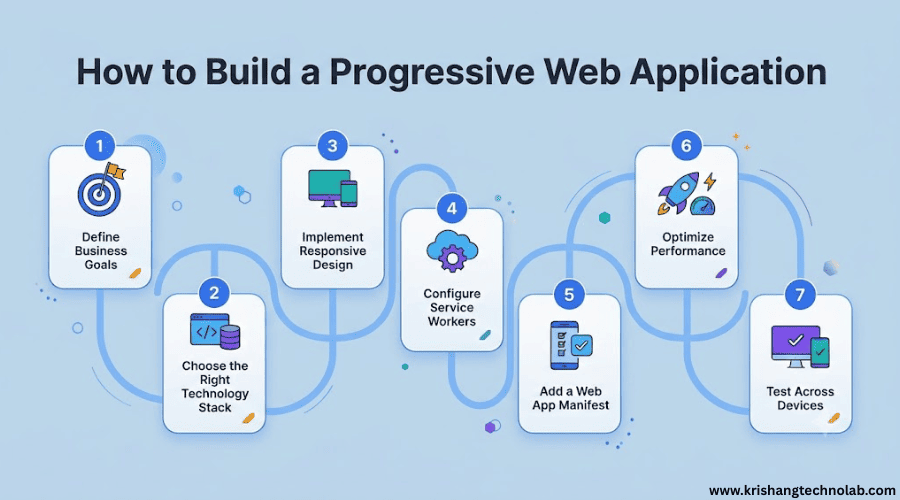
Planning, selecting the right tech stack, and following a user-centric development process are essential for a successful Progressive Web App. The process covers business goals, testing, and deployment, ensuring better performance, security, and usability. Following industry best practices helps businesses create an Enterprise Progressive Web Application with speed, reliability, and scalability.
Define Business Goals
Before you start development you should understand your target audience, their needs and have clear business goals. This guarantees the Progressive Web Application is developed with the right features, capabilities and user experience to satisfy customer demands. And a clear strategy reduces the risk of development and helps the project to align with long term business goals.
Choose the Right Technology Stack
Selecting the right technology stack is a crucial step in building a successful Progressive Web Application. Modern frameworks such as React, Angular, Vue.js, and Next.js provide the flexibility and capabilities needed to create fast, scalable, and feature-rich web applications. Companies looking to build advanced solutions can Hire React, Angular, Vue.js, and Next.js Developers with expertise in these technologies to develop high-performance applications across multiple devices. For example, developers can use React-based technologies to create a React PWA that delivers smooth performance, reliability, and an engaging user experience. These frameworks support essential Progressive Web Application features, including offline access, responsive design, and performance optimisation.
When creating a PWA mobile app, businesses need to evaluate platform-specific factors, including PWA iOS compatibility, to deliver a smooth and consistent experience across devices. Choosing a suitable framework based on application requirements can improve development efficiency, reduce maintenance efforts, and support future growth. A well-defined Mobile App Development Process enables teams to organise development stages effectively and build applications with better performance and scalability.
Implement Responsive Design
Regardless of the device people choose, a Progressive Web Application should provide a consistent experience. The interface should be able to automatically adapt to different screen sizes, orientations and resolutions, without losing functionality, whether the user accesses it on a smartphone, tablet, laptop or desktop. As a result, responsive design makes it easier to read and encourages users to navigate through and interact with the application comfortably. It also assists businesses in creating a more engaging and accessible digital experience.
Configure Service Workers
Similarly, the interface of a Progressive Web Application should provide a consistent experience across smartphones, tablets, laptops, and desktops. The app adapts to different screen sizes and resolutions while maintaining usability, responsiveness, and performance. This consistency makes Progressive Web Application development a reliable approach for modern digital solutions.
Add a Web App Manifest
The web app manifest plays a crucial role in making a Progressive Web Application installable by defining essential metadata such as the app’s name, icons, theme colors, and splash screens. It maintains the branding consistency when the app is added to the home screen of a user. This makes the app more native feeling, makes the user more familiar and increases overall engagement to the app.
Optimize Performance
Additionally, performance optimisation plays a key role in ensuring a Progressive Web Application provides a fast, smooth, and reliable user experience. Methods such as image optimisation, code minification, lazy loading, efficient caching, and resource compression improve application responsiveness and help reduce loading times. As a result, these enhancements limit unnecessary resource requests, improve content delivery, and allow users to enjoy a seamless browsing experience across different devices and networks. To achieve better results with Progressive Web App development, companies can Hire Expert Frontend Developers who can apply advanced optimisation practices and create high-performing digital solutions.
Test Across Devices
Test the Progressive Web Application for browser compatibility, responsiveness, security, and overall user experience before deployment. Specifically, multi-device and browser testing ensures the application performs consistently across different environments without errors or layout issues. Final validation identifies issues early and ensures a stable, secure, user-friendly experience.
Common Challenges of Progressive Web Application Development
Developing a Progressive Web Application requires careful planning to manage technical challenges and deliver a seamless user experience. Factors such as browser support, device-specific capabilities, and native API restrictions should be considered during the development process. For PWA WordPress projects and PWA React applications, developers need to focus on efficient caching, comprehensive testing, and performance improvements. Additionally, incorporating React Developer Tools helps teams examine components, identify potential issues, and maintain a smoother development workflow. Overall, a strategic approach ensures applications remain secure, reliable, and responsive across multiple platforms.
The Future of Progressive Web Application Technology
The future of the Progressive Web Application ecosystem looks increasingly promising as browser vendors continue expanding support for modern APIs, enabling developers to create richer and more engaging experiences. As businesses look to build a Progressive Web App or build PWA solutions, emerging technologies like artificial intelligence, machine learning, voice interfaces, augmented reality, and advanced personalisation will play an important role in shaping the future of digital experiences. With improved internet connectivity worldwide and increasing demand for scalable, cost-effective applications, PWAs are expected to become a preferred choice for organisations. Working with an experienced Progressive Web App company can help startups and enterprises build a strong foundation for future innovation and long-term growth.
Final Thoughts on Progressive Web Applications
In summary, a Progressive Web Application represents the evolution of modern web development by combining the accessibility of websites with the functionality of native mobile applications. A PWA application provides businesses and users with several benefits, including offline functionality, push notifications, responsive design, and fast performance.
So, want to speed up digital transformation, reduce development costs, or increase customer engagement? Building a Progressive Web Application can help businesses deliver high-quality, secure, and optimised digital experiences across different devices. As technology continues to evolve, PWAs will play an important role in shaping the future of modern application development.
Ultimately, businesses need to understand how they work and follow the latest development practices to meet customer expectations and create scalable solutions. In conclusion, a Progressive Web Application is an effective approach for organisations looking to build reliable and engaging digital experiences.
Found this post helpful? Don't forget to share it with your network!